
SPINE CONDITION
Headaches & Face Pain
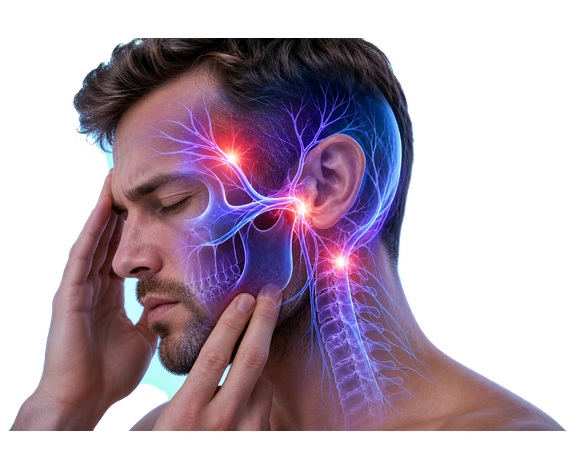
Headaches, migraines, and face pain have a way of stealing your focus — the meeting you couldn't concentrate through, the meal you ate on one side of your mouth, a quiet room you had to retreat to in the middle of the day. It can come from your migraines, jaw joint, facial muscles, nerves, or even your neck, and it's one of the most common reasons people just start living around it — reaching for over-the-counter medication before anyone figures out exactly what's driving it. But small changes can be the starting point of bigger problems years down the road, and treating it upstream — before tension becomes chronic or a nerve becomes permanently irritated — can change that trajectory. At Wellward, we don't guess based on where it hurts or what the MRI shows. We find the real source first.


Does This Sound Familiar?
Headaches, migraines, and face pain can feel like a tight band around your skull, a throbbing that pulses with your heartbeat, a clicking or locking jaw, or a jolt of pain along one side of your face. It can be triggered by chewing, stress, screen time, or seemingly nothing at all.
It doesn't just change how you feel. It changes your focus, your sleep, your patience, whether you can be in a bright or loud room without wincing. When you start avoiding ordinary things because your head or face might not cooperate, it's time to get answers.
If several of the statements feel familiar, the next step is not guessing. It may be time for a more complete evaluation of what is actually driving your pain.
Do you…
If several of these feel familiar, the next step isn't guessing — it's a real answer.
- Catch yourself clenching or grinding your teeth, especially when stressed?
- Get headaches that start at the base of your skull or behind one eye?
- Need a dark, quiet room to ride out a migraine, sometimes with nausea or light sensitivity?
- Feel like medications are not enough to manage?
What Causes Head & Face Pain?
Headaches and face pain usually start one of two ways: a specific trigger — jaw clenching, a neck injury, a stressful stretch of life — or the slow buildup of muscle tension and nerve sensitivity that finally tips into a pattern that won't quit.
Either way, your body starts protecting itself: guarding your jaw, tensing your shoulders and neck, avoiding bright light or loud noise. That's a smart short-term response, but over time it just reinforces the pattern — often turning an occasional headache into a daily one. And confusingly, where you feel it may not be where the real problem is — a headache can start in your neck, and jaw pain can start in stress you're carrying elsewhere.

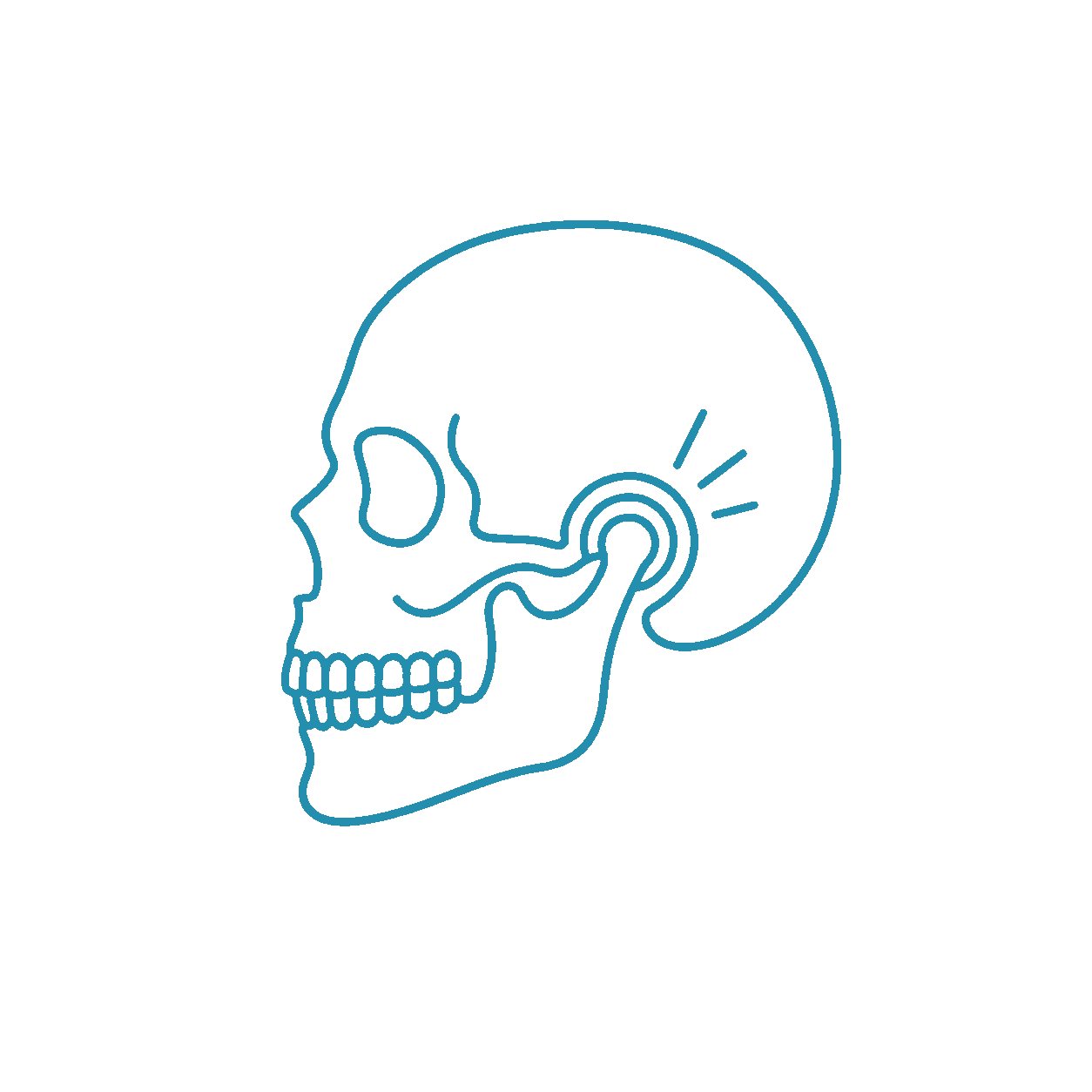
TMJ (Jaw Joint)
The joint connecting your jaw to your skull. Overuse, clenching, or grinding can irritate it, causing clicking, locking, or pain radiating into your ear or temple.
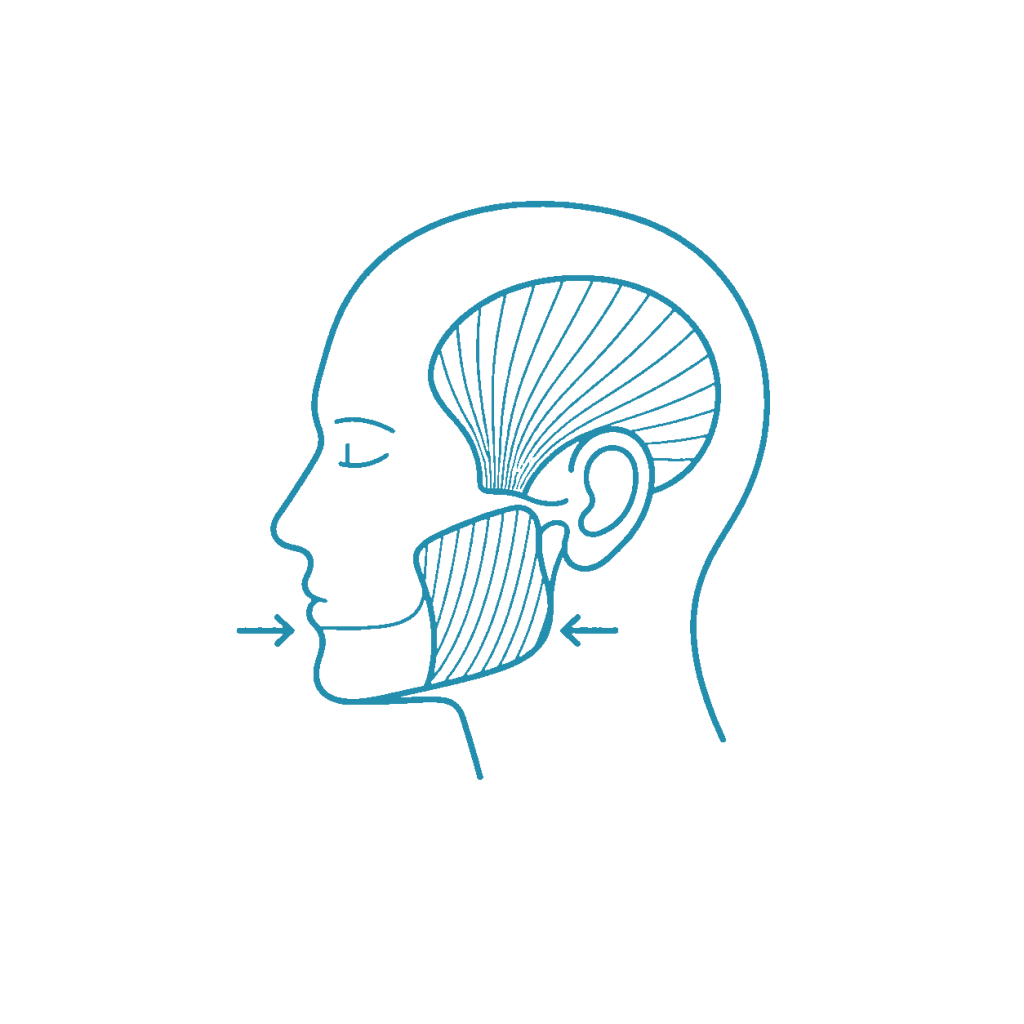
Jaw & Facial Muscles
The muscles used for chewing and facial expression. Chronic clenching or stress can turn them into a major source of head and face pain on their own.

Occipital Nerve
Nerves at the base of your skull. Irritation here causes sharp, shooting pain that can wrap toward your eye.
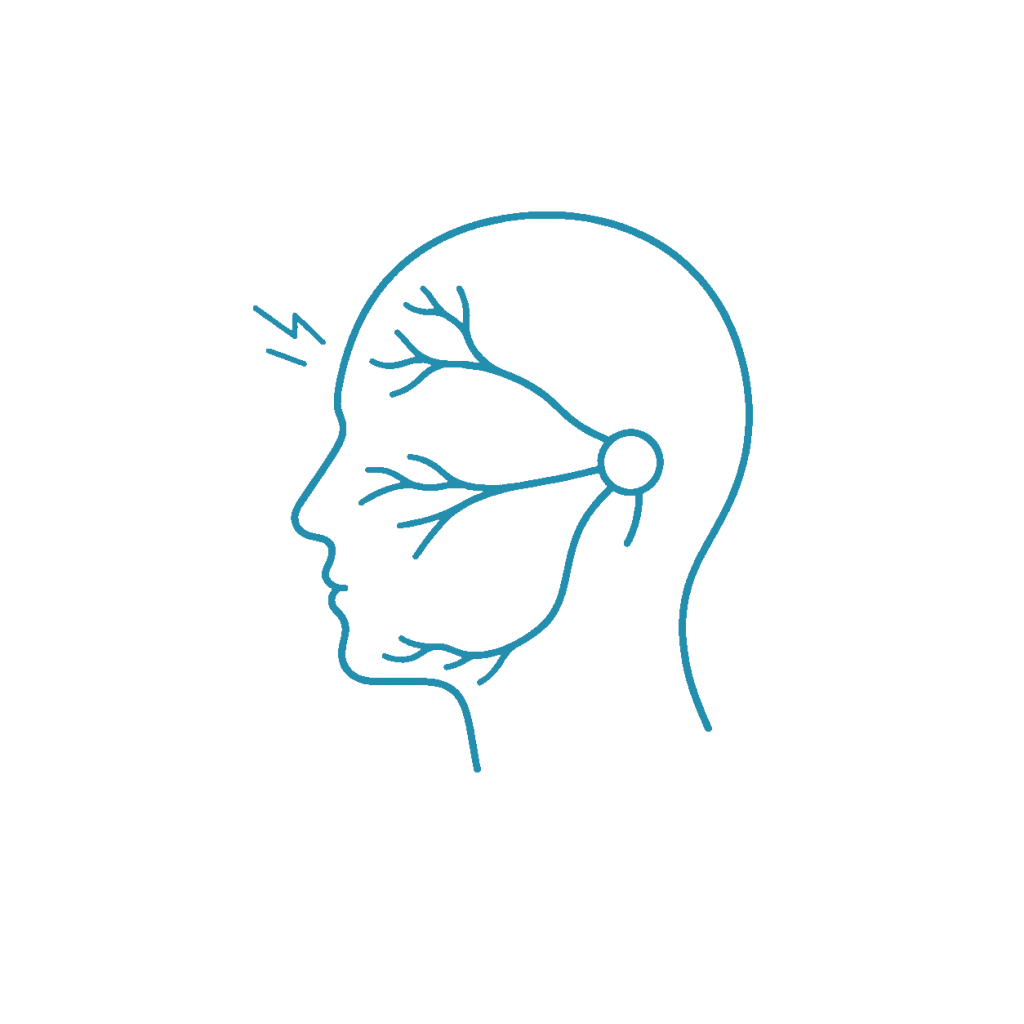
Trigeminal Nerve
The main sensory nerve of the face. Irritation or compression can cause brief, severe, shock-like facial pain.
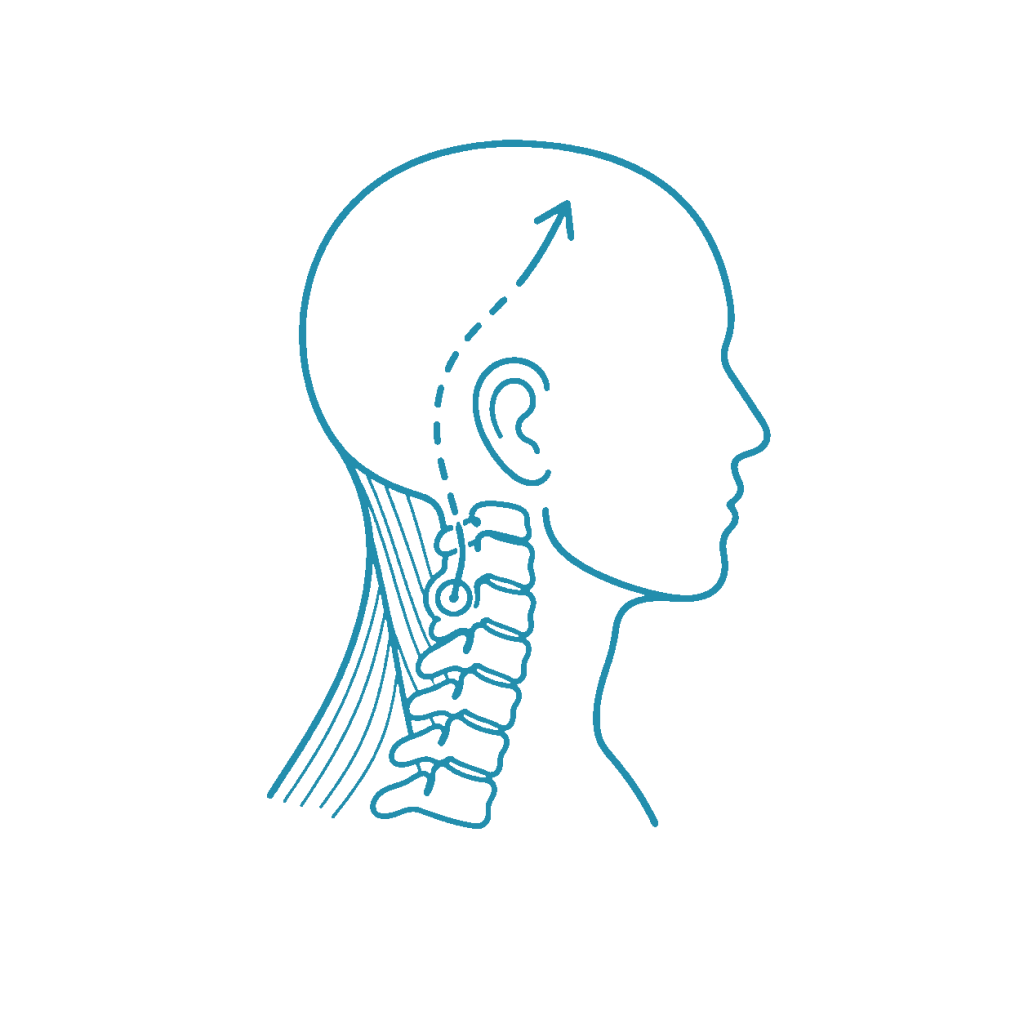
Neck Problems
Pain that starts in your neck's joints or muscles but is felt in your head — one of the most commonly missed sources of "headaches.
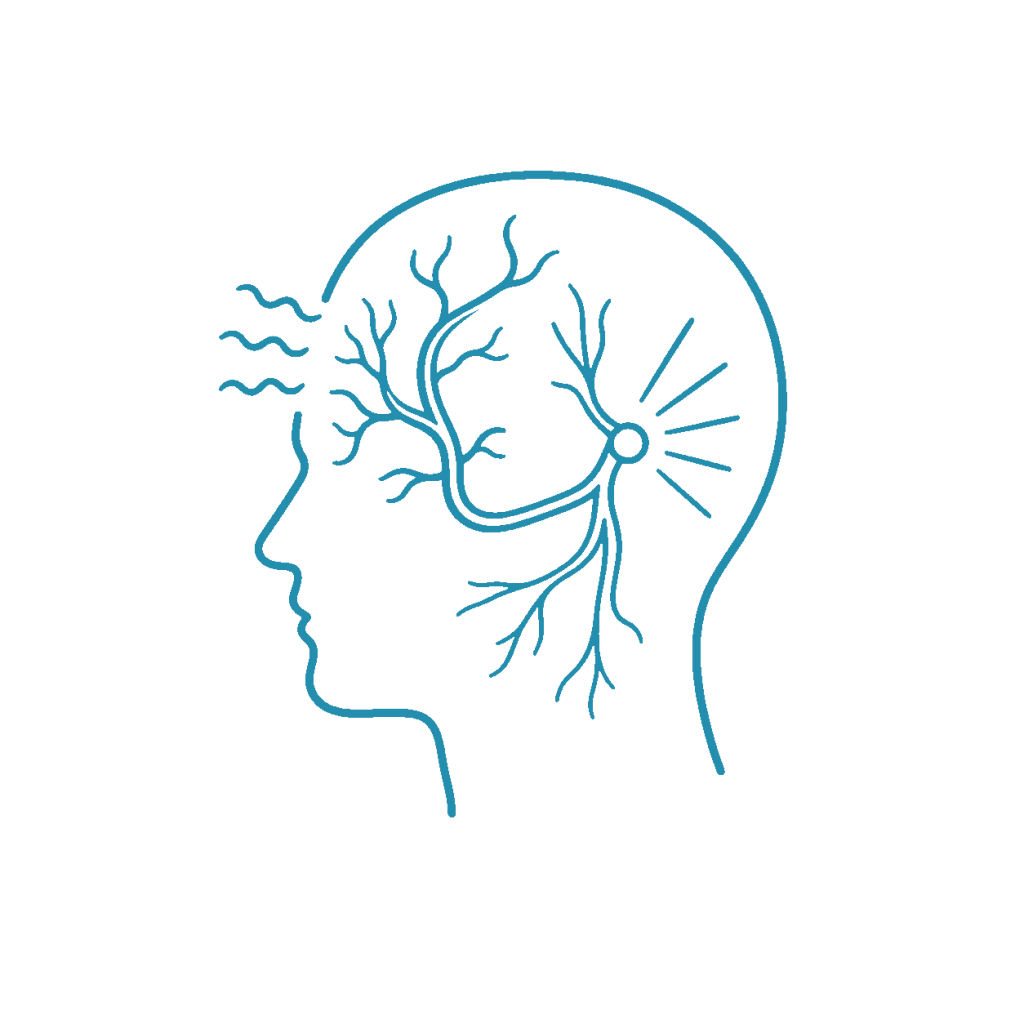
Vascular & Sensitization Mechanism
Changes in blood vessel activity and nerve sensitivity that produce throbbing, often one-sided head pain — the mechanism behind migraine.

Related Conditions
Head and face pain isn't one diagnosis — it's an umbrella that covers jaw joint problems, muscle tension, nerve irritation, and referred pain from your neck, and they can feel frustratingly similar. That overlap is exactly why so many people end up on a revolving door of over-the-counter medication that eases pain for a while without ever addressing what's actually wrong.
Head & Face Pain
General head, jaw, or facial pain not yet tied to a specific diagnosis.
Migraine
Throbbing, often one-sided head pain, sometimes with nausea, aura, or light and sound sensitivity
Tension-Type Headache
A tight, band-like ache around the head, often stress-related.
TMJ Disorder (TMD)
Jaw clicking, locking, or pain, often worse chewing or yawning.
Cervicogenic Headache
A headache that actually starts in the neck, often felt at the base of the skull or behind one eye.
Occipital Neuralgia
Sharp, shooting pain from the base of the skull toward the eye.
Trigeminal Neuralgia
Brief, severe, shock-like pain on one side of the face.
Chronic Daily Headache
Headaches occurring 15 or more days a month.
How Wellward Evaluates Head & Face Pain
Head and face pain has more possible sources than almost any other area we treat, so we don't stop at the first guess. Every plan is built on four things:
Your Story
What triggers it, what you've already tried, and how it's affecting your work, sleep, and mood.

Movement & Load
How you chew, clench, and hold tension — and which movements or situations bring the pain on.

Structure & Imaging
We review your imaging in context, and when we need a closer look at your jaw joint or the muscles and nerves around it, live ultrasound [→ /diagnostics/ (Diagnostic Ultrasound)] lets us see it directly.

Pain Mapping
Jaw pain, headaches, and facial nerve pain can all overlap, so we test each possible source directly [→ /diagnostics/ (Pain Mapping)] with targeted diagnostic injections until we know exactly which one is responsible.
Treatment Pathways
Your plan comes from what Pain Mapping finds — not a generic "headache protocol."
Conservative
Whether as an alternative or supplement to traditional headache and migraine treatments, Wellward's process of understanding root causes can identify conservative treatments with bigger impact. Beyond interventional options like Botox, Pain Mapping can pinpoint the nerves, instability, or deficits actually triggering the muscle tension and headaches — often leading to more durable, less invasive options than Botox alone. Rehab, jaw- and neck-focused hands-on manual therapy [→ /manual-movement-based-therapies/], and stress and posture strategies resolve a lot of head and face pain on their own. When more is needed, we add targeted nerve blocks or trigger point injections [→ /interventional-pain/] to break the cycle.
Regenerative
Whether for TMJ and jaw joint problems or cervicogenic headaches that trigger migraines or tension headaches, regenerative therapies can help. When the headaches originate from gaps in real tissue support, we can draw your own cells same-day and pair them with PRP or other orthobiologic injections [→ /regenerative-therapies/] — used once your evaluation confirms it's a genuine fit, not as a first resort.
What Patients Experience
Real stories. Real outcomes.
Patient testimonial will be placed here.

Broader Support When Pain Goes Deeper
When head or face pain is persistent or life feels limited, additional support — especially for nervous system sensitization — can help.
Warrior Program
Advanced support for complex tissue, nervous system sensitization, and persistent pain.
Pain Coaching
One-on-one coaching to build resilience, improve habits, and restore confidence.

Neural Reset Program
A science-based program to calm the nervous system and reduce chronic pain signals.

Surgery or Urgent Evaluation
In some cases, surgery or urgent evaluation may be the safest or most appropriate path. We will help you understand all options
Common Questions About Headaches & Face Pain
Headaches can feel like an urgency. Most new patients can schedule a discovery call within one business day and a new patient visit within a week. Once in our system, we offer same-day injections that can interrupt a headache before it starts or give rescue therapy once it's there.
It depends on your diagnosis and what's recommended. Diagnostic and conservative care is often covered by insurance, while some regenerative therapies are not. For urgent care headache treatments, we'll work through your insurance but if it's a barrier or denies care, we'll walk through your options and costs so there are no surprises.
Yes — often. Most headaches and much of TMJ and facial nerve pain won't show up on an MRI at all, since they're frequently muscular or functional problems rather than structural ones. That's why we don't rely on imaging alone — it's one input into Pain Mapping, not the whole answer.
Yes — it's one of the most commonly missed sources of chronic headaches. Joints and muscles in your upper neck can refer pain straight into your head, and it's easily mistaken for a tension headache or migraine until it's specifically tested for.
Often, yes. When a migraine is being triggered or worsened by referred pain from your neck or jaw — a cervicogenic or TMJ-related trigger — treating that structural source directly can reduce how often migraines happen and how bad they get, without relying on medication alone. It's not the answer for every migraine, which is why Pain Mapping is used to confirm the actual trigger first.
For the right candidate, it can support healing in the jaw joint itself — but a lot of head and face pain is muscular or nerve-related rather than structural, so it's not the right fit for everyone. Your evaluation determines which approach actually fits your diagnosis.
Ready to Understand What Is Driving Your Headaches & Face Pain?
Take the next step toward lasting relief.
Take the Readiness Quiz
Find out if our approach is right for your condition.
Schedule a Discovery Call
Talk with our team and get answers to your questions.
Ready to Find Out What's Really Driving Your Head or Face Pain?
Take the next step toward a day that isn't shaped around your next headache.