STRUCTURED PROGRAMS—CORE

CORE—Chronic Opioid
Risk-Reduction &
Empowerment

Many people become physically dependent on opioid medication while taking it exactly as prescribed for pain. CORE offers a respectful path to reduce risk, build alternatives, and make more informed medication decisions—without treating the patient as the problem.

Who CORE Is For

CORE is designed for people on long-term prescribed opioid therapy who are ready to examine whether the medication is still helping enough, what risks have accumulated, and what a safer, healthier, functional future could look like.

Readiness Without a Day-One Taper Commitment

You do not have to promise a taper before entering CORE. You do need enough readiness to participate honestly, consider change, and avoid a cycle of friction that makes progress difficult. The program helps readiness grow into informed action.

Program Format

  • One hour per week
  • Equally available virtually or onsite
  • Medical oversight and coordinated care
  • Group education and guided discussion
  • Individual goal setting and health coaching
  • Gradual medication changes only when clinically appropriate and mutually planned

What Participation Involves

The goal is improved safety, understanding, function, and decision-making. Some participants may reduce medication; others may first build the stability and alternatives needed to consider change more confidently.

What to Expect

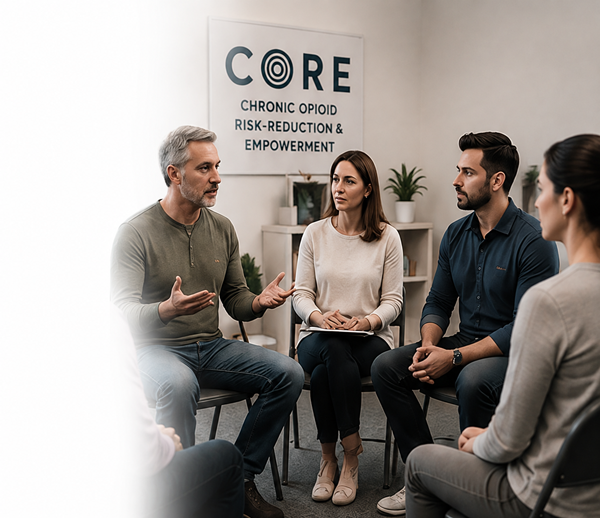
Participants can expect a respectful, non-stigmatizing process focused on education, safer decision-making, and gradual progress. The goal is not to force medication reduction, but to build the understanding, stability, and alternatives needed to make informed choices.

The CORE Curriculum

Health

Understand pain, tissue health, medication effects, and non-opioid treatment options.

1

Energy

Learn how stress, sleep, mood, and nervous-system sensitization influence pain and medication needs.

2

Activity

Build confidence, capacity, and participation in daily life without relying solely on medication to make movement possible.

3

Lifestyle

Develop routines that support recovery, reduce risk, and make medication decisions more sustainable.

4

Medication Risk Reduction

Learn how tolerance, physical dependence, side effects, overdose risk, and medication interactions can change over time—and how risk can be reduced even before a taper begins.

5

Long-Term Stability

Build a plan for maintaining progress through setbacks, flare-ups, transitions in care, and changes in medication or function.

6

Supported Through Kentucky Collaboration

CORE is supported by the Kentucky Opioid Abatement Fund through a collaborative grant with the University of Louisville.

Ready to Explore a Safer
Relationship With Pain Medication?

You do not need to commit to a taper today. You do need to be ready for an honest conversation about what comes next.