
Stellate Ganglion
Block (SGB)
Sometimes the danger has passed, but the nervous system has not received the message. The body remains on alert—sleep is light, the startle response stays high, anxiety rises quickly, and pain may feel amplified.
A stellate ganglion block is designed to temporarily interrupt part of that overactive fight-or-flight response and create an opportunity for the nervous system to settle.
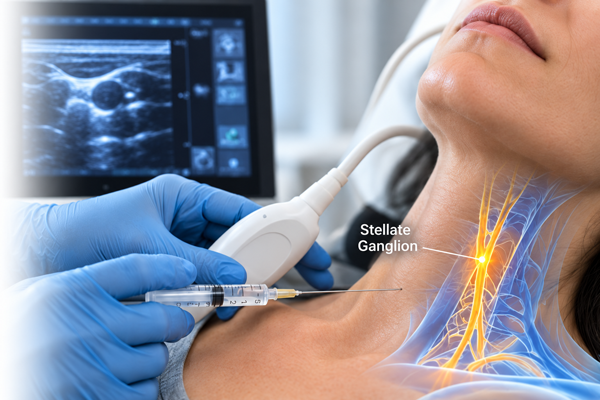
What SGB Does
The stellate ganglion is part of the sympathetic nervous system located in the lower neck. Using image guidance, a small amount of local anesthetic is placed near this nerve structure.
The goal is not to erase a memory or numb emotion. It is to reduce excessive sympathetic signaling that may be keeping the body in a persistent high-alert state.
What Treatment Is Like
SGB is performed as an image-guided outpatient procedure. You remain awake while the neck is positioned and the skin is cleaned and numbed.
After the injection, temporary changes on the treated side may include a drooping eyelid, smaller pupil, facial warmth, hoarseness, or a sensation of nasal congestion. You are monitored after the procedure and receive instructions about activity, driving, and what symptoms should prompt a call.
When It May Be Considered
- Trauma-related hyperarousal or PTSD symptoms
- Elevated sympathetic tone associated with persistent pain
- A prolonged high-alert state after serious illness or physical stress on the body
- Sleep disruption, exaggerated startle, or rapid fight-or-flight activation linked to sympathetic overactivity
- Selected nerve-pain conditions driven partly by an overactive fight-or-flight response
What to Expect
Some patients notice a shift in sleep, startle response, anxiety intensity, pain sensitivity, or overall sense of body-wide tension soon after treatment. Others notice a more gradual or limited change.
A response may help confirm that sympathetic overactivity is contributing to the symptoms. The result is judged by meaningful changes in daily life—not simply by whether a temporary physical sign appeared after the injection.
When It May Not Be the Right Fit
SGB may not be appropriate when symptoms are better explained by an untreated medical, neurologic, psychiatric, or structural condition. It is also not a substitute for urgent psychiatric care when there is active suicidality, psychosis, severe instability, or another need for a higher level of treatment.
Bleeding risk, infection, medication allergies, neck anatomy, uncontrolled medical illness, or certain anticoagulant medications may also change whether or how the procedure is performed.
Part of a Broader Plan
SGB does not erase trauma or replace therapy. It may reduce the physiologic intensity that makes sleep, emotional regulation, pain care, and ongoing treatment harder to access.
The treatment window can be used to support psychotherapy, sleep restoration, nervous-system regulation, movement, medication planning, and other care directed at the underlying condition. When a therapist or mental-health provider is involved, coordination can help patients make better use of any period of reduced hyperarousal.
Risks and Limitations
Temporary changes such as a drooping eyelid, facial warmth, hoarseness, nasal congestion, or mild difficulty swallowing can occur as the sympathetic nerves temporarily quiet down. These usually resolve as the medication wears off.
Not everyone experiences the same degree or duration of benefit. For some people, SGB creates a meaningful period of reduced hyperarousal; for others, the change is modest or short-lived. The goal is to use any improvement to support sleep, therapy, regulation, and the rest of the recovery plan.
More significant complications are uncommon and are reviewed before treatment.
Frequently Asked Questions
No. Combat trauma brought wider attention to SGB, but an elevated sympathetic state can follow many forms of trauma, persistent pain, illness, surgery, or prolonged physical stress on the body.
Some patients notice changes within hours or days, while others have a more gradual or limited response. The effect and duration vary.
The response may last days, weeks, months, or longer. Duration is unpredictable and depends on the condition, severity, and whether other parts of the treatment plan are addressed during the window of improvement.
Not necessarily. Some patients obtain enough benefit from one procedure, while others consider a repeat block based on the quality and duration of the response.
Does Your Body Still Feel Stuck on High Alert?
An evaluation can help determine whether sympathetic overactivity may be part of the picture.