
PRP (Platelet-Rich Plasma) & Platelet Lysate
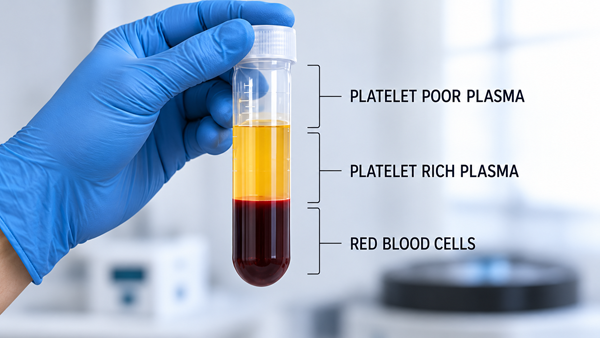
Platelets are best known for helping blood clot, but they also carry growth signals that help coordinate healing. PRP concentrates platelets from your own blood and places them into tissue that has stalled, weakened, or repeatedly failed under load.
Not All PRP Is the Same
We customize the preparation and injection approach for the specific tissue being treated rather than using the same product for every condition.
How Treatment Is Performed
Conditions We May Evaluate
- Chronic tendinopathy and selected partial tears
- Ligament injury or pain at attachment to bone
- Early-to-moderate joint degeneration
- Selected meniscus, labral, capsular, or spinal conditions
- Tissue that has plateaued despite appropriate rehabilitation
Platelet Lysate
Recovery Is Part of the Treatment
When It May Not Be the Right Fit
How This Fits Into a Broader Plan
PRP or platelet lysate may be used as a primary treatment, as part of a staged plan, or alongside other care. A joint may need treatment of both the joint space and supporting tissues. A nerve may need platelet lysate together with hydrodissection, movement retraining, or treatment of the tissue repeatedly irritating it.
For selected tendons, PRP may also be paired with percutaneous tenotomy. The procedure is only one part of the recovery process. Protection, progressive loading, manual and movement-based care, sleep, nutrition, metabolic health, and follow-through all help determine the outcome.
Risks and Limitations
Frequently Asked Questions
PRP concentrates platelet signaling from blood, so a simple blood draw is sufficient to harvest what’s needed. BMAC and adipose tissue scaffolding use cells that are in high concentration either in your bone marrow or fat, so collecting these cells takes an additional procedure. The best option depends on the target and clinical goal rather than a simple “stronger versus weaker” ladder.
Some conditions are treated with one procedure; others benefit from a series or staged treatment of multiple structures. The plan is based on diagnosis and response.
PRP and platelet lysate are commonly self-pay. Costs and alternatives are reviewed before scheduling.
Could Instability Be the Missing Piece?
A focused evaluation can determine whether the painful structure needs more support—not simply less inflammation.