
PRP & Regenerative
Treatment for Knee Pain
& Arthritis
Knee pain is often treated as though the joint space is the whole problem. But arthritis and persistent knee pain can involve much more than cartilage alone. The meniscus, ligaments, tendons, joint capsule, kneecap mechanics, alignment, and the way the knee handles load can all contribute. That is why we map the knee before deciding what—or where—to inject.
PRP for Knee Pain
and Arthritis
PRP uses a concentrated preparation made from your own blood to deliver platelets and healing signals to injured or degenerative tissue. Treatment may involve the knee joint itself or supporting structures such as the meniscus, ligaments, tendons, or joint capsule.
Why Pain Mapping
Matters
Two people can have similar arthritis on an X-ray and very different reasons for hurting. Pain Mapping combines examination, movement testing, ultrasound, and diagnostic injections to identify the structures contributing to your pain.
When It May Be
Considered
- Mild-to-moderate knee arthritis
- Meniscus degeneration or selected tears
- Tendon or ligament problems
- Joint instability or laxity
- Persistent pain after rehab
- Recurrent joint irritation
- Temporary benefit from steroid injections
- Exploring non-surgical options before knee replacement
Can It Delay
Knee Replacement?
Sometimes. Regenerative care cannot rebuild every severely damaged knee or correct major deformity. But when the joint and surrounding tissues still have a reasonable capacity to respond, treatment may help reduce pain, improve function, and reinforce supporting tissues.
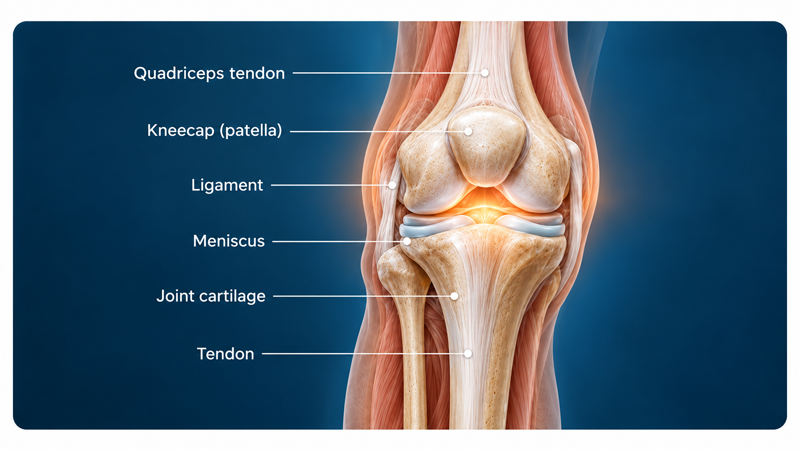
A Comprehensive Approach
Depending on your evaluation, treatment may include PRP, prolotherapy, BMAC, or adipose tissue scaffolding, along with rehabilitation, movement retraining, and other supportive care. The goal is to treat the whole knee—not just the joint space.
Risks and Limitations
Frequently Asked Questions
Cortisone is primarily used to suppress inflammation and can provide valuable short-term pain relief. PRP takes a different approach by concentrating platelets and healing signals from your own blood and placing them into tissues that are injured, degenerative, or struggling to recover.
Not necessarily. The joint space may be one target, but ligaments, tendons, the joint capsule, meniscus-related structures, or other areas may also need attention depending on the Pain Mapping findings.
PRP should not be viewed as a guaranteed way to regrow lost cartilage. Patients can experience meaningful improvements in pain and function even without visible changes in cartilage on imaging.
Improvement may come from creating a healthier environment within the joint and strengthening surrounding tissues so damaged cartilage is subjected to less stress.
PRP concentrates platelets and healing signals from your blood. More advanced regenerative treatments such as BMAC or adipose tissue scaffolding use cells and signaling factors collected from bone marrow or fat.
The best option depends on the tissues involved, stage of damage, and Pain Mapping findings.
Some patients are treated with one procedure, while others benefit from staged or repeat treatment. The number depends on the structures involved, severity of damage, response, and rehabilitation progress.
Looking for More Than Another Knee Injection?
Find out whether the problem is limited to the joint—or whether the meniscus, ligaments, tendons, or stability of the knee are also contributing.
Recommended primary CTA: Schedule a Knee Regenerative Evaluation.
Looking for More Than Another Knee Injection?
Find out whether the problem is limited to the joint—or whether the meniscus, ligaments, tendons, or stability of the knee are also contributing.