
Shoulder Pain &
Rotator Cuff Injuries:
PRP & Regenerative Treatment
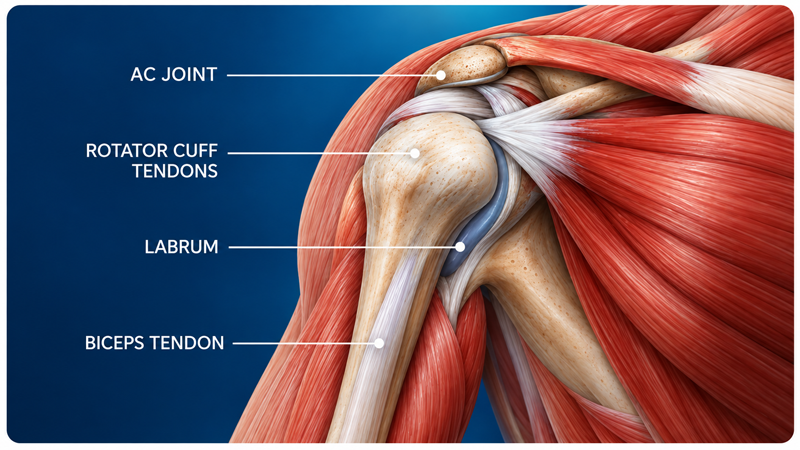
Shoulder pain is often labeled “rotator cuff” even when several structures are contributing. The rotator cuff tendons, biceps tendon, labrum, joint capsule, ligaments, AC joint, and the way the shoulder blade moves can all influence whether the shoulder heals or keeps getting irritated. That is why we map the shoulder before deciding what—or where—to inject.
PRP for Shoulder Pain
and Rotator Cuff Injuries
PRP uses a concentrated preparation made from your own blood to deliver platelets and healing signals to injured or degenerative tissue. Treatment may target the rotator cuff, biceps tendon, labrum, capsule, ligaments, AC joint, or several areas depending on the findings.
Why Pain Mapping
Matters
An MRI can show several abnormalities, and not every tear is responsible for the pain. Pain Mapping combines examination, movement testing, ultrasound, imaging review, and diagnostic injections to identify which structures are actually contributing.
When PRP May Be
Considered
- Rotator cuff tendinopathy or selected partial tears
- Biceps tendon injury
- Labral or capsular irritation
- Ligament injury or instability
- AC-joint or glenohumeral arthritis
- Persistent pain after rehabilitation
- Exploring non-surgical options before surgery
When Advanced
Treatment May Fit
When tissue damage is more significant, BMAC or adipose tissue scaffolding may be considered. These treatments use cells and signaling factors from your own bone marrow or fat during the same visit. The choice depends on the tissue involved and stage of damage—not simply on choosing the most advanced option.
When Tenotomy May Add Value
When Surgery May Be the Better Path
Treatment and Recovery
Recovery Is Part of the Treatment
Risks and Limitations
Frequently Asked Questions
PRP may be considered for selected partial tears and chronic tendon degeneration, but it cannot reliably reconnect a complete or significantly retracted tear. The ultrasound and MRI findings help determine whether the tendon remains a reasonable target.
It depends on the diagnosis. Some patients need treatment of a tendon, while others have joint, capsule, ligament, or multiple contributing problems.
Steroid injections are primarily used to suppress inflammation. PRP is intended to support a healing response in injured or degenerative tissue when the biology and mechanics still allow recovery.
Some conditions are treated with one procedure; others benefit from staged or repeat treatment depending on the injury and response.
Find out whether the pain is coming from the rotator cuff, biceps, joint, labrum, capsule, instability—or a combination.
Looking for More Than Another Shoulder Injection?
Find out whether the pain is coming from the rotator cuff, biceps, joint, labrum, capsule, instability—or a combination.