
Joint Injections
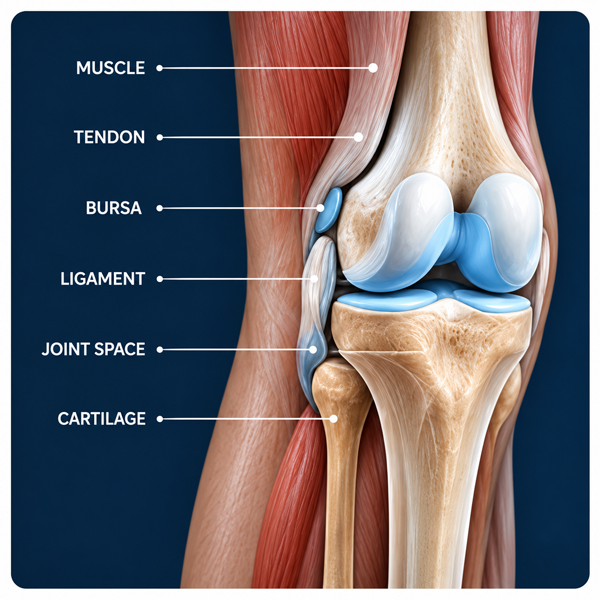
A joint injection can mean very different things. Medication may be placed inside the joint, around an irritated bursa, beside a tendon, at a ligament attachment, or along a painful capsule. The right target depends on what is actually generating the pain—not simply which joint hurts.
Injections Inside
the Joint
Medication is placed directly into the joint space to address inflammation or confirm that the joint surface is contributing. Depending on the condition, this may involve corticosteroid, local anesthetic, hyaluronic acid, or an orthobiologic discussed on the regenerative pages.
Hyaluronic Acid
/ Viscosupplementation
Hyaluronic acid is used most commonly for knee osteoarthritis. It is intended to improve the joint environment and lubrication rather than numb the area immediately. It can be used in other joints as well, but insurance may pose challenges in approval outside the knees.
Bursa, Tendon, Ligament
& Capsular Injections
Pain around a joint may arise from the rotator cuff, biceps tendon, peritrochanteric bursa, patellar tendon, collateral ligaments, plantar fascia, retinaculum, capsule, or another support structure. Treating the joint space alone will not address those problems.
Why Image Guidance
Matters
Ultrasound or fluoroscopy helps confirm that the medication reaches the intended structure while avoiding nearby nerves, vessels, and tendons. Ultrasound also allows the clinician to compare the injection target with movement, tenderness, and tissue appearance in real time.
When It May Be Appropriate
- Osteoarthritis with a significant inflammatory or mechanical component
- A joint, bursa, tendon, ligament, or capsule has been identified as a pain contributor
- Pain is limiting rehabilitation and a temporary treatment window would add value
- A diagnostic injection is needed before regenerative or surgical decisions
What We Try to Avoid
Repeated injections on a fixed schedule can become maintenance without progress. If relief lasts only a few weeks or the same procedure is needed every few months, we look for the missing piece: instability, an untreated support structure, altered mechanics, nerve irritation, or disease that needs a different pathway.
Could Regenerative Care Help?
In selected cases, regenerative care may help change the inflammatory environment, repair or reinforce supporting tissues, and improve how the joint handles load. The goal may be both preventative and restorative, slowing the forces that drive decline while supporting tissue recovery where healing remains possible.
Common Joints We Treat
Frequently Asked Questions
It depends on the diagnosis and injectate. An anesthetic may last hours, corticosteroid may help for weeks or months, and hyaluronic acid may take longer to show benefit. A short response can still provide diagnostic information.
Sometimes, but not always. A joint may have more than one pain generator, and durable improvement may require treatment of supporting tissues plus rehabilitation.
Many diagnostic, corticosteroid, and hyaluronic acid injections are covered when criteria are met. Orthobiologic injections are commonly self-pay. Coverage is confirmed before scheduling.
Looking for More Than Another Temporary Shot?
A structure-by-structure evaluation can determine whether an injection is the right tool—and where it should actually go.