
Peripheral Nerve
Stimulation
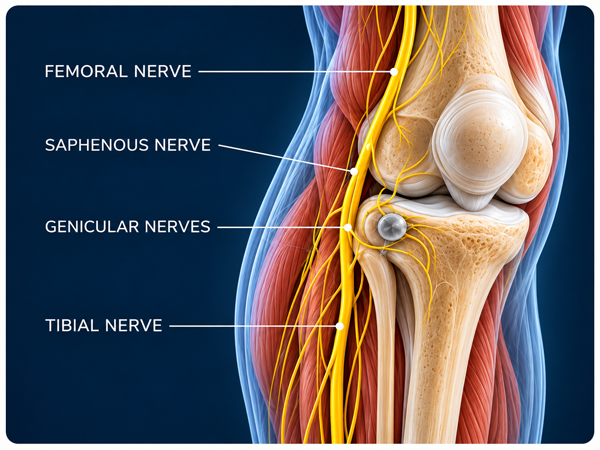
Using the same mechanism behind why you instinctively rub your head after bumping it, peripheral nerve stimulation (PNS) delivers mild electrical signals that help interrupt pain messages before they reach conscious awareness. When pain can be traced to a specific peripheral nerve or body region, a thin wire is placed near the involved nerve to reduce pain and improve function.
What Treatment
Is Like
Using ultrasound or X-ray guidance, a thin wire is placed near the selected nerve and connected to a small stimulator. During a temporary treatment period, the external portion is secured under a dressing. You test whether stimulation improves pain, sleep, movement, or daily function before any longer-term decision is made.
Temporary and
Longer-Term Systems
PNS is not one single device pathway. Some systems are designed for a limited treatment period and are removed after several weeks; others use a trial followed by a longer-term implant. The choice depends on the nerve, diagnosis, expected duration, and coverage.
When It May Be
Considered
- Localized shoulder, knee, hip, foot, or limb pain carried by an identifiable nerve
- Selected post-surgical or post-traumatic nerve pain
- Occipital neuralgia or other branch-specific neuralgia
- Pain that responded to a diagnostic block but is not appropriate for ablation
- Persistent pain despite rehabilitation, medication, and simpler nerve treatment
Why Target
Selection Matters
A stimulator placed near the wrong nerve is unlikely to help. Pain Mapping, examination, ultrasound, diagnostic blocks, and the area of skin supplied by the nerve are used to confirm that the proposed target explains enough of the patient’s symptoms.
How PNS Differs From Ablation
Ablation reduces signaling by interrupting a sensory nerve. PNS attempts to modulate signaling while leaving the nerve intact. PNS may be preferred when the nerve has mixed function, when preserving sensation matters, or when a reversible approach is more appropriate.
Could Regenerative Care Help?
PNS can quiet an overly sensitive nerve, but it does not repair the tissue that may be repeatedly irritating it. When a damaged joint, tendon, ligament, or scar-related structure is part of the problem, regenerative care may be considered alongside nerve stimulation.
Risks and Limitations
Temporary soreness or skin irritation can occur, particularly while an external lead or dressing is in place. Leads can also shift, and stimulation may not provide enough meaningful relief to justify continuing. PNS changes pain signaling but does not repair the underlying structure that may be irritating the nerve. Infection, bleeding, device problems, or uncomfortable stimulation are possible but uncommon.
Common Conditions We Treat
Carpal Tunnel
Syndrome
Cubital Tunnel
Syndrome
Tarsal Tunnel
Syndrome
Occipital
Neuralgia
Peripheral
Neuropathy
CRPS
Post-Surgical
Nerve Injury
Other Conditions
Frequently Asked Questions
No. Some systems are intentionally temporary. Others may progress from a trial to an implanted system. We explain the specific device pathway before treatment.
PNS targets a named nerve outside the spine. SCS targets broader pain signaling near the spinal cord and is generally used for more diffuse or spine-related neuropathic pain.
Can the Pain Be Reached at the Nerve
Rather Than the Spine?
A focused nerve evaluation can determine whether a peripheral target offers a more precise option.