
Pelvic Pain
Treatments
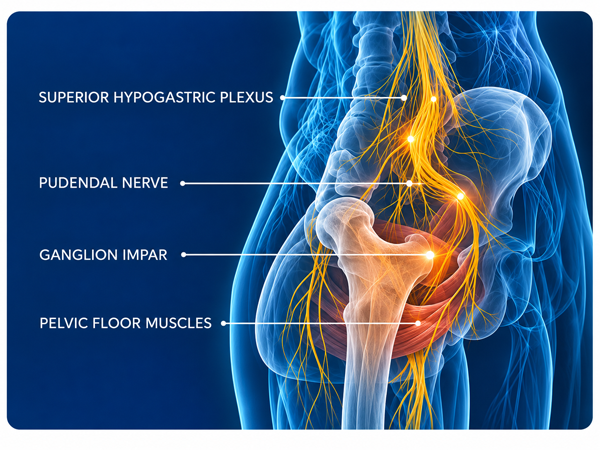
Pelvic pain may arise from nerves, internal organs, pelvic-floor muscles, joints, ligaments, scar tissue, or several of these at once. Because the symptoms often overlap, treatment begins by identifying which pathway is carrying the pain—not simply where the pain is felt.
Nerve-Mediated
Pelvic Pain
- Ganglion impar block
- Pudendal nerve block & ablation
- Peripheral nerve stimulation
Targets specific nerves that may be carrying pain signals from the pelvis, perineum, rectum, or surrounding areas.
Visceral Pelvic Pain
- Superior hypogastric plexus block & ablation
Addresses pain from internal pelvic organs, including deep, aching or cramping pain that can be difficult to localize.
Muscular Pelvic Pain
- Trigger-point injections
- Pelvic-floor Botox
Helps calm painful muscle trigger points and reduce spasm, often paired with pelvic-floor rehabilitation.
Joint, Ligament &
Structural Pain
- Pubic symphysis injection
Targets the pubic symphysis and supporting tissues for selected pain after childbirth, trauma, repetitive loading, athletic injury, or instability.
Regenerative Care
May be considered for ligament injury, joint instability, tendon damage, or incomplete healing using PRP or other preparations from your own blood, bone marrow, or fat tissue.
How We Choose the Right Path
The location and character of pain, examination, pelvic-floor findings, imaging, movement testing, and carefully selected diagnostic injections help distinguish nerve-mediated, visceral, muscular, and structural contributors. More than one pathway may need treatment.
Could Regenerative Care Help?
When pelvic pain is linked to ligament injury, joint instability, tendon damage, or incomplete tissue healing, regenerative options such as PRP or another treatment prepared from your own blood, bone marrow, or fat tissue may be considered. Learn more about Regenerative Therapies.
Risks and Limitations
Pelvic pain can have more than one source. A successful block or injection may identify one important contributor without explaining every symptom. When symptoms suggest a gynecologic, urologic, gastrointestinal, neurologic, or other medical condition, that evaluation remains an important part of care. Risks depend on the treatment performed but generally include temporary soreness, bruising, numbness, increased pain, or short-lived weakness.
Common Conditions We Treat
Pelvic Pain
Endometriosis
Pain
IC / Bladder Pain
Post-Surgical
Pain
Hip / Pelvic
Instability
Other Conditions
Frequently Asked Questions
Treatment depends on the pain pathway and may include targeted nerve blocks or ablation, peripheral nerve stimulation, pelvic-floor trigger-point injections or Botox, joint injections, rehabilitation, and selected regenerative options.
History, examination, pain distribution, pelvic-floor findings, imaging when appropriate, and carefully selected diagnostic blocks can help identify whether a specific nerve or plexus is contributing to symptoms.
Pelvic Pain Deserves a More Precise Map
A diagnosis-driven evaluation can identify whether the next step should target a nerve, organ-related pathway, muscle, joint, ligament, or healing deficit.