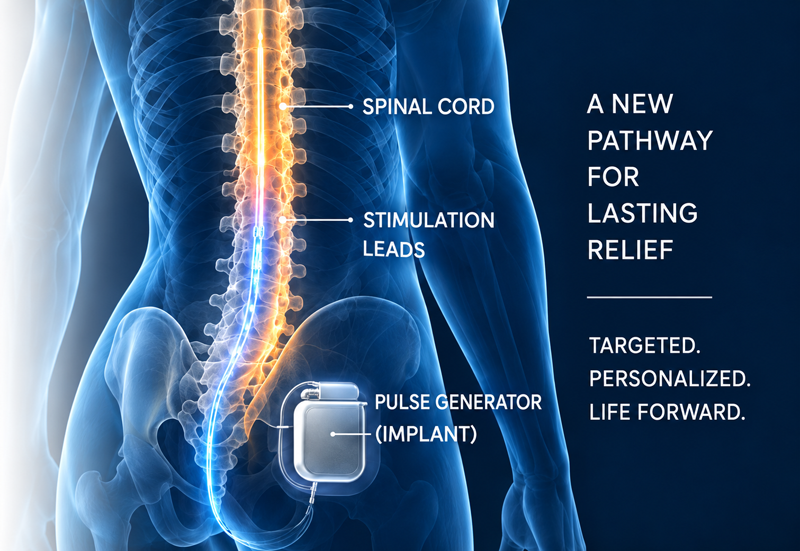
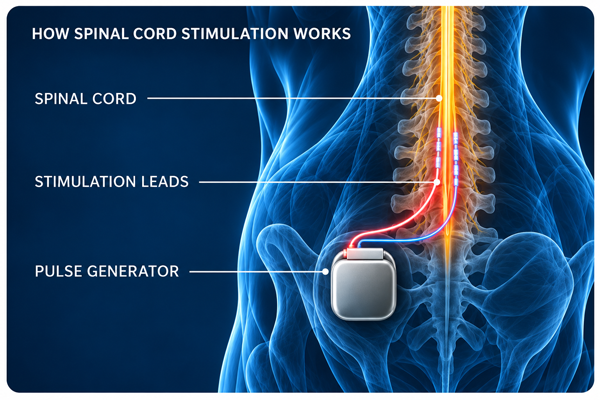
Some chronic pain can no longer be traced to a single structure that can be injected, repaired, or ablated. Spinal cord stimulation (SCS) uses mild electrical signals near the spinal cord to change how pain messages are processed before they reach conscious awareness—similar to how rubbing your head after bumping it can soften the pain signal.
Temporary leads are placed through needles and connected to an external device for several days. You test the therapy during normal activities and track pain, sleep, function, and medication use.
Permanent Implant
If the trial is successful, leads and a small pulse generator are implanted. Modern systems offer different waveforms, programming options, and rechargeable or non-rechargeable batteries.
When It May Be Considered
Persistent neuropathic leg or back pain after spine surgery
Complex regional pain syndrome or selected nerve injury pain
Chronic painful diabetic neuropathy
Pain not relieved by rehabilitation, medication, injections, or appropriate surgery
What It Does—and Does Not Do
SCS changes pain signaling; it does not rebuild a disc, decompress a nerve, or correct instability. A careful diagnostic review is needed so a treatable structural cause is not bypassed.
Preparing for a Trial
The process commonly includes imaging review, medical and psychological screening, discussion of expectations, and temporary adjustment of blood-thinning medication when safe. The goal is not to “pass a test,” but to identify factors that influence safety and long-term success.
Could Regenerative Care Help?
SCS is designed for pain signaling that remains after simpler treatments have not provided enough relief. It does not repair a disc, joint, ligament, or other structural source. Regenerative care may remain an option when a repairable contributor is identified, either before stimulation or as part of a broader plan.
Risks and Long-Term Considerations
Risks include infection, bleeding, spinal fluid leak, nerve injury, lead migration or breakage, loss of benefit, uncomfortable stimulation, battery replacement, and the need for revision or removal. MRI compatibility and future surgical planning should be discussed before implantation.
Yes, but removal is another procedure. The reversible trial is intended to reduce the chance of committing to a device that does not provide meaningful value.
Before an Implant, Make Sure the Treatable Problems Have Been Treated
SCS can be valuable for the right pain pathway, but it should follow—not replace—a clear diagnostic process.