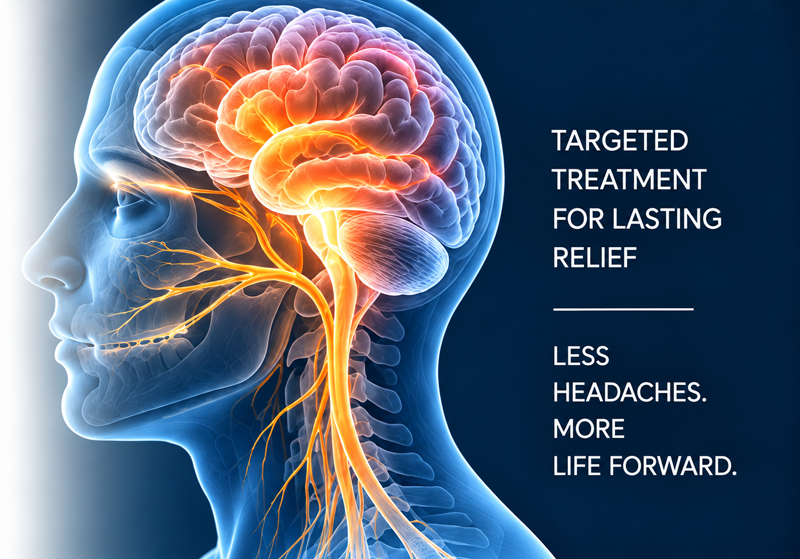
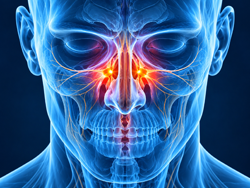
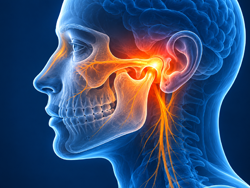
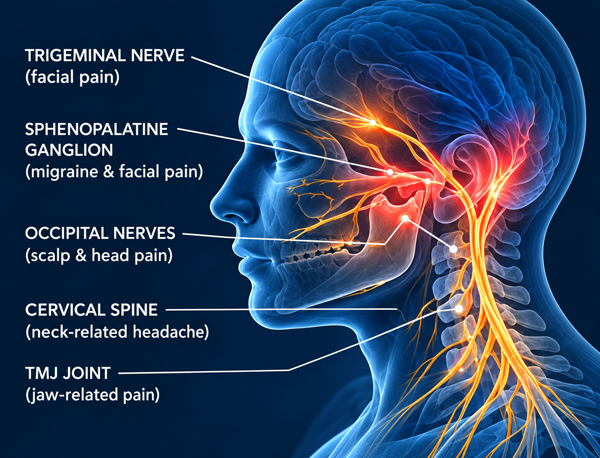
Headaches and facial pain can come from very different pathways. Migraine biology, the upper neck, occipital nerves, jaw and TMJ, facial nerves, muscle tension, and other neurologic conditions can overlap—and more than one contributor may be active at the same time.
Occipital or sphenopalatine blocks may sometimes calm an evolving headache early, depending on the pattern and involved pathway.
How We Choose the Right Treatment
We look at where the pain begins, what triggers it, neck and jaw findings, imaging, and whether a diagnostic injection would add useful information. The goal is to identify which contributors can actually be treated.
Could Regenerative Care Help?
When injured cervical, TMJ, or other supporting structures are part of the problem, regenerative care may be considered as part of a broader plan.
When Another Evaluation Comes First
A new severe headache, neurologic changes, fever, significant trauma, vision loss, or another unusual change may require urgent evaluation.
Risks and Limitations
Temporary soreness, bruising, numbness or a brief increase in headache can occur. More significant complications are uncommon and depend on the procedure performed.
More Than One Contributor
A successful block may identify one important trigger without explaining every headache, so longer-term care may still be needed.
Yes. Migraine is a neurologic condition and does not have to originate in the neck. The evaluation looks for migraine itself as well as neck, jaw, muscle, or peripheral nerve triggers that may be adding to the overall burden.
Sometimes. In selected headache patterns, a targeted block can interrupt or reduce an acute attack, particularly when used early in its evolution. The response varies and depends on whether the targeted pathway is actually involved.
Headaches that begin in the upper neck or base of the skull, are affected by neck movement or position, and travel toward the head or eye may have a cervicogenic component. Examination and targeted diagnostic procedures can help distinguish this from migraine or another headache disorder.
Botox is generally considered for selected chronic migraine patterns when the frequency and clinical history support it. We review prior treatments and headache frequency before recommending it.
Yes. Jaw-joint irritation, clenching, grinding, and overworked chewing muscles can contribute to temple, facial, and head pain. TMJ may also coexist with migraine or another headache disorder.
Looking for More Than Another Headache Medication?
A focused evaluation can help determine whether migraine, the upper neck, an occipital or facial nerve, TMJ, or another pathway is adding to the problem.