DECISION GUIDE—ROTATOR CUFF SURGERY ALTERNATIVES

Rotator Cuff Surgery
Alternatives

A rotator cuff tear does not automatically mean surgery—and avoiding surgery is not always the right goal. What matters is the type of tear, tendon quality, strength, function, age of the injury, and whether the shoulder still has a reasonable capacity to recover.

A Connected View of the Shoulder

Wellward evaluates the shoulder as a connected system rather than treating every painful shoulder as the same rotator cuff problem.

Look beyond
the MRI

Find the real
source of pain

Preserve when
possible

A plan for
long-term function

When Surgery May Be the Better Path

Large acute tears, major tendon retraction, progressive weakness, significant loss of function, or injuries unlikely to heal adequately without repair may deserve surgical evaluation. Earlier recognition matters because some repairable tears become harder to repair over time.
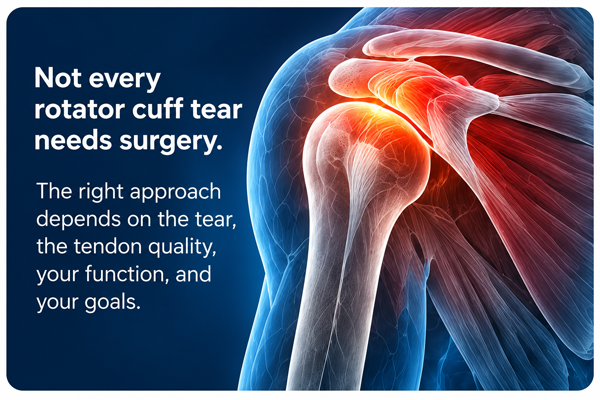

Even When Surgery Is Needed, Tissue Quality Still Matters

Repairing a chronically worn tendon can be a little like stitching frayed fabric. For selected patients, regenerative treatment, rehabilitation, and attention to the rest of the shoulder may be considered before or after surgery to support tissue health and recovery.

What Non-Surgical Options May Include

The right plan is based on what is found—not on choosing a procedure first.

Targeted Rehabilitation

Strength, movement and loading strategies to improve function, reduce pain, and support long-term shoulder health.

Targeted Injections

Cortisone or other injections may reduce pain and help you move better while we address the underlying problem.

Regenerative Treatments

PRP or other regenerative approaches may support the healing environment in selected patients with tendon injury or degeneration.

Percutaneous Tenotomy

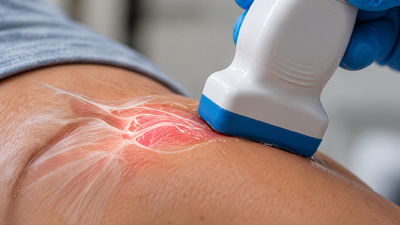
For focal areas of chronically unhealthy tendon tissue, ultrasound-guided tenotomy may help remove or disrupt that tissue and create a healthier surface for repair.

What We Look for Before You Decide

  • Partial versus full-thickness tearing
  • Tendon quality and chronic degeneration
  • Strength and functional loss
  • Biceps and labral involvement
  • Capsular restriction or instability
  • Arthritis and joint mechanics
  • Whether pain is actually coming from the rotator cuff

Who May Still Have a Reasonable
Non-Surgical Window

  • Chronic tendinopathy
  • Selected partial or full-thickness tears with preserved function
  • Preserved strength despite pain
  • Degenerative tendon disease without major retraction
  • Symptoms driven by more than one structure
  • A thoughtful non-surgical evaluation before repair

Related Paths

Shoulder Conditions   →
Diagnostics & Pain Mapping   →
Shoulder Pain & Rotator Cuff Injuries: PRP & Regenerative Treatment   →
Percutaneous Tenotomy   →
Manual & Movement-Based Care   →
DOES A ROTATOR CUFF TEAR REALLY NEED SURGERY?

Find Clarity About Your Next Step

The answer depends on more than the MRI. We evaluate the tear, the rest of the shoulder, and the functional demands you need the tendon to meet.

Evidence-informed options
Relevant resources
A plan for long-term function