
DECISION GUIDE—PRP VS CORTISONE
PRP vs Cortisone:
Which Injection Fits
the Problem?
PRP and cortisone are both injections, but they are used for different purposes. The better choice depends on what is causing the pain, what the tissue needs, and what you are trying to accomplish.
Two Different Approaches
PRP and cortisone can both be useful tools. They work in different ways and are designed for different goals.
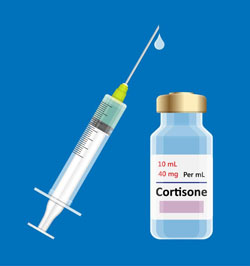
What Cortisone Is Designed to Do
Corticosteroid is primarily used to reduce inflammation. That can be valuable when inflammation is limiting movement, sleep, rehabilitation, or function. For some conditions, a well-placed steroid injection can provide an important window for recovery.
- Reduces inflammation
- Can provide faster pain relief
- Useful to allow rehabilitation and function
- May help while the diagnosis is being clarified
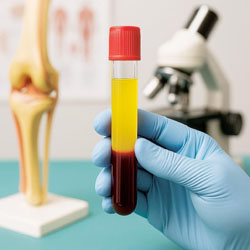
What PRP Is Designed to Do
PRP concentrates platelets and signaling proteins from your own blood and places them into selected injured or degenerative tissue. Rather than primarily suppressing inflammation, the goal is to support a healing response and improve the environment around tissue that has stalled or repeatedly failed under load.
- Uses your own blood (platelets and growth factors)
- Supports the body’s healing response
- Aims to improve tissue quality and environment
- Often considered for degenerative or overuse conditions

The Target Matters as Much as the Product
An arthritic joint, tendon, ligament, disc, and irritated nerve do not necessarily need the same preparation—or even the same type of injection. Pain Mapping helps determine whether the problem is primarily inflammatory, structural, mechanical, or a combination.
Joint
arthritis
Tendon
injuries
Ligament
problems
Disc
conditions
Nerve
irritation
Dose and Precision Matter
Corticosteroid is not simply “good” or “bad”; dose, frequency, tissue, and placement all matter. When the pain source is poorly localised, a larger regional dose may be used. When the target is identified more precisely, the clinician can often be more deliberate and use the lowest effective exposure appropriate to the problem.
Repeated or unnecessary corticosteroid exposure can have tradeoffs for cartilage, tendon, bone, blood sugar, and other tissues depending on the dose and setting. Pain Mapping is intended to improve targeting so treatment is not broader—or repeated more often—than the diagnosis requires.
Can They Ever Be Part of the Same Plan?
Yes. Treatment does not have to be ideological. A patient may need inflammation controlled at one stage and regenerative or mechanical treatment at another. The sequence should reflect the diagnosis and recovery goals.
Calm
inflammation
Rebuild
strength
Support
tissue healing
Reduce
recurrence
When Cortisone May Make More Sense
- A significant inflammatory flare needs to be calmed
- Short-term relief is needed to allow rehabilitation or function
- The tissue is not an appropriate regenerative target
- The diagnosis is still being clarified and a targeted injection may provide useful information
When PRP May Make More Sense
- A tendon, ligament, joint, or other tissue has become chronically degenerative
- The goal is longer-term tissue support rather than repeated suppression of symptoms
- Prior short-term injections helped but the problem keeps returning
- The diagnosis shows a realistic biological target for regenerative care
Find Clarity About Your Next Step
Start with the tissue and the treatment goal—not the name of the injection.