
SPINE CONDITION
Knee Pain
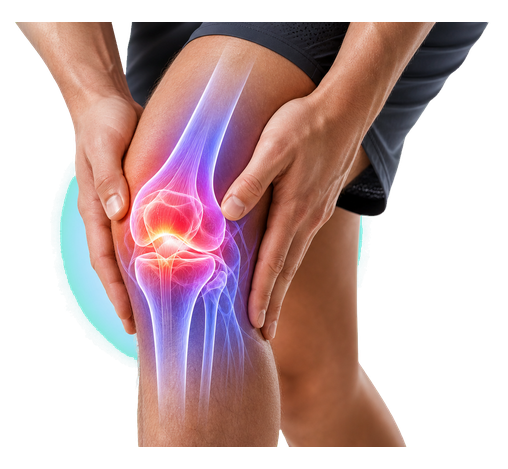
Knee pain has a way of putting a ceiling on your day — the stairs you used to take two at a time, the run or the hike you've quietly stopped planning, a full night's sleep without your knee waking you up. It can come from the meniscus, cartilage, ligaments, or tendons that make up your knee, and it's one of the most common reasons people slow down movements, assuming it's just "wear and tear". But small changes can be the starting point of arthritis in a few years, and treating it upstream of an end-stage knee can change the trajectory and prevent the need for surgery or joint replacement. At Wellward, we don't guess based on where it hurts or what the MRI shows. We find the real source first.


Does This Sound Familiar?
Knee pain can feel like a deep ache going down stairs, a sharp catch or give-way when you pivot, or swelling that shows up after a long day on your feet. It can grind, click, or lock up without warning and makes you feel guarded or unstable.
It doesn't just change how you move. It changes whether you take the stairs, how far you walk, whether you get down on the floor with your kids or grandkids. When you start avoiding ordinary things because your knee might not cooperate, it's time to get answers.
If several of the statements feel familiar, the next step is not guessing. It may be time for a more complete evaluation of what is actually driving your pain.
Do you…
If several of these feel familiar, the next step isn't guessing — it's a real answer.
- Take the elevator or hold the railing because stairs bother your knee?
- Feel your knee catch, lock, or give way when you pivot or change direction?
- Notice swelling that shows up after activity or by the end of the day?
- Avoid getting down on the floor because getting back up is the hard part?
- Feel like no one has fully explained why you feel as bad as you do?
What Causes Knee Pain?
Knees may seem like a simple hinge joint, but they're actually complex and unique to each individual. An old injury, years of running or pivoting sports, or simple wear on the joint surfaces can quietly overload your knee — until one day something tips over into pain that won't let up.
People often fall into a revolving door of steroid or "lubricant" (hyaluronic acid) injections when the root cause is assumed and not confirmed. Those are short-term solutions, but over time ignoring the underlying problem progressively wears the knee down leading to arthritis, surgery or even hip or opposite knee pain.

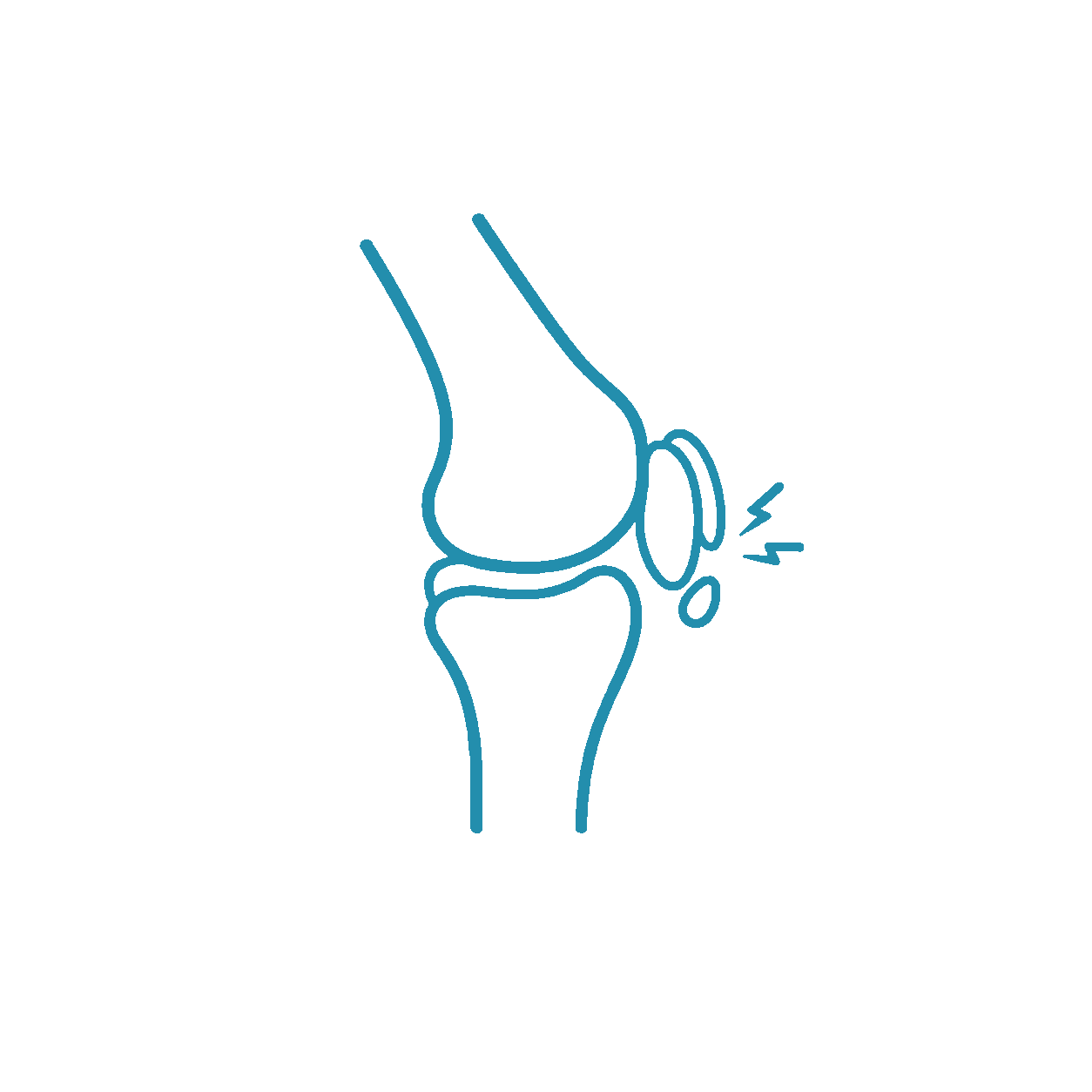
Bursa
Cushions in various parts of the knee. Irritation here is one of the earliest, most visible signs that something's off.
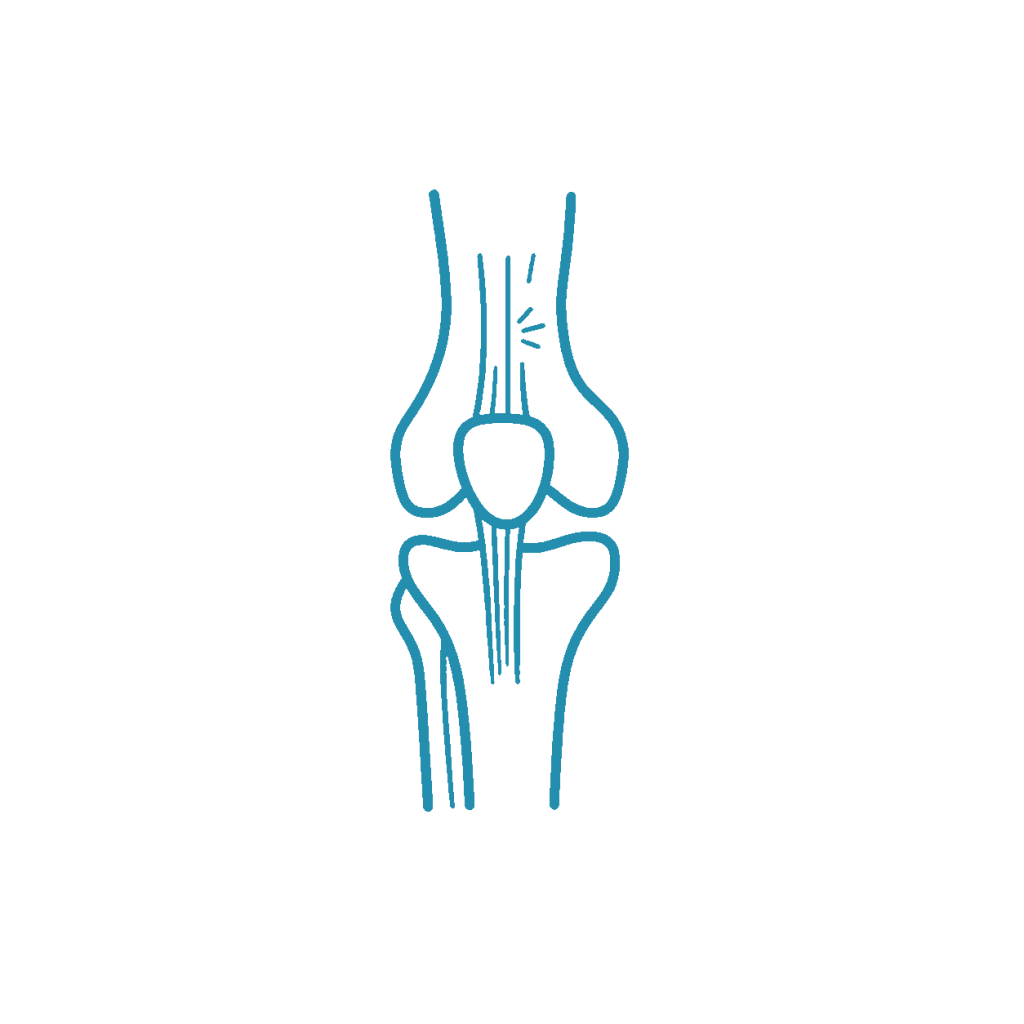
Tendons
Connect your thigh muscles to your kneecap and shin. Overuse here causes an aching, gradually building pain that's often one of the first signs of trouble.
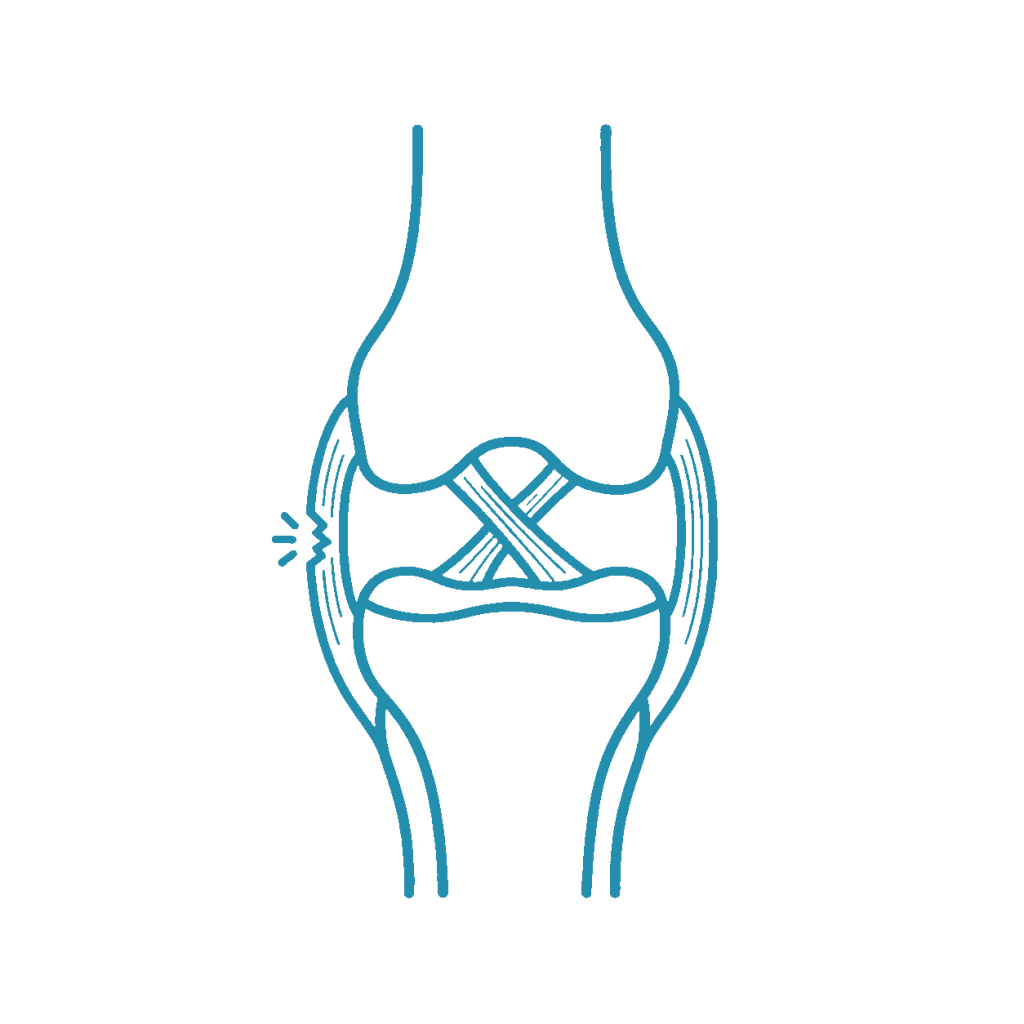
Ligaments
The four main stabilizers (ACL, MCL, LCL, PCL) and multiple secondary supports of your knee. When strained or torn, the joint loses stability — and instability wears down everything around it faster.
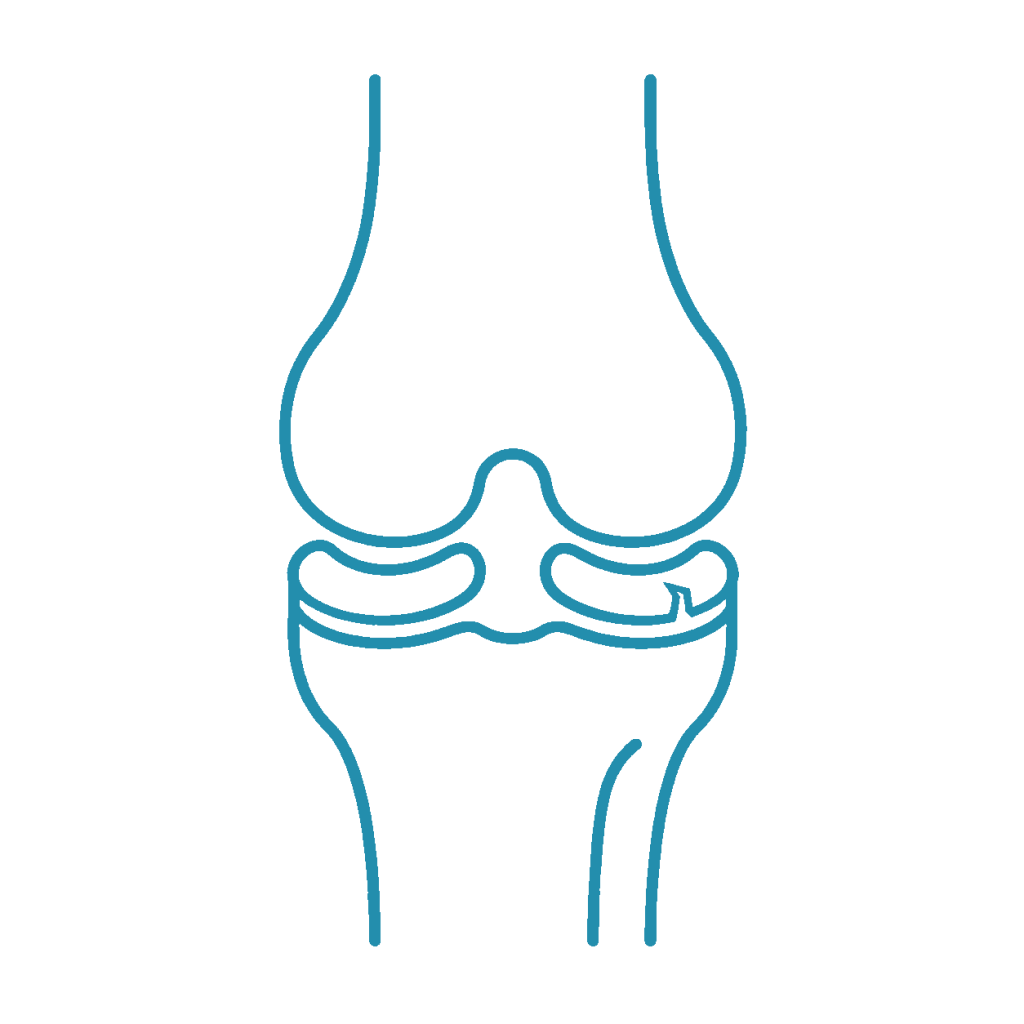
Meniscus
The C-shaped cartilage cushions that absorb shock between your thigh and shin bones. Tears here — especially in an unstable knee — accelerate wear on the joint surfaces. Removing it with a meniscectomy may reduce pain but accelerates arthritis 6x (a risk borne out across multiple studies, generally cited in the three- to seven-fold range).
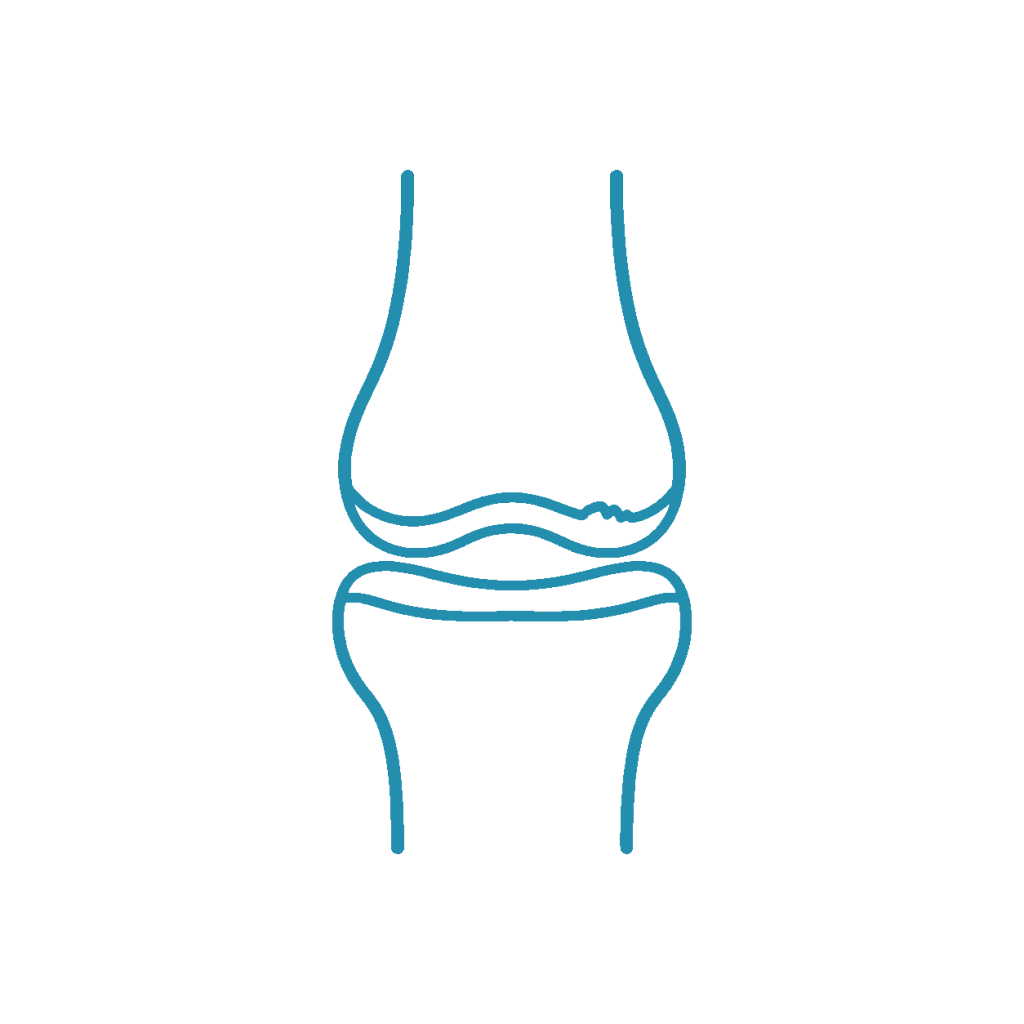
Cartilage
The smooth lining on the ends of your bones. Once it's damaged, or an unstable knee keeps grinding on it, it erodes faster than it can repair leading to arthritis.
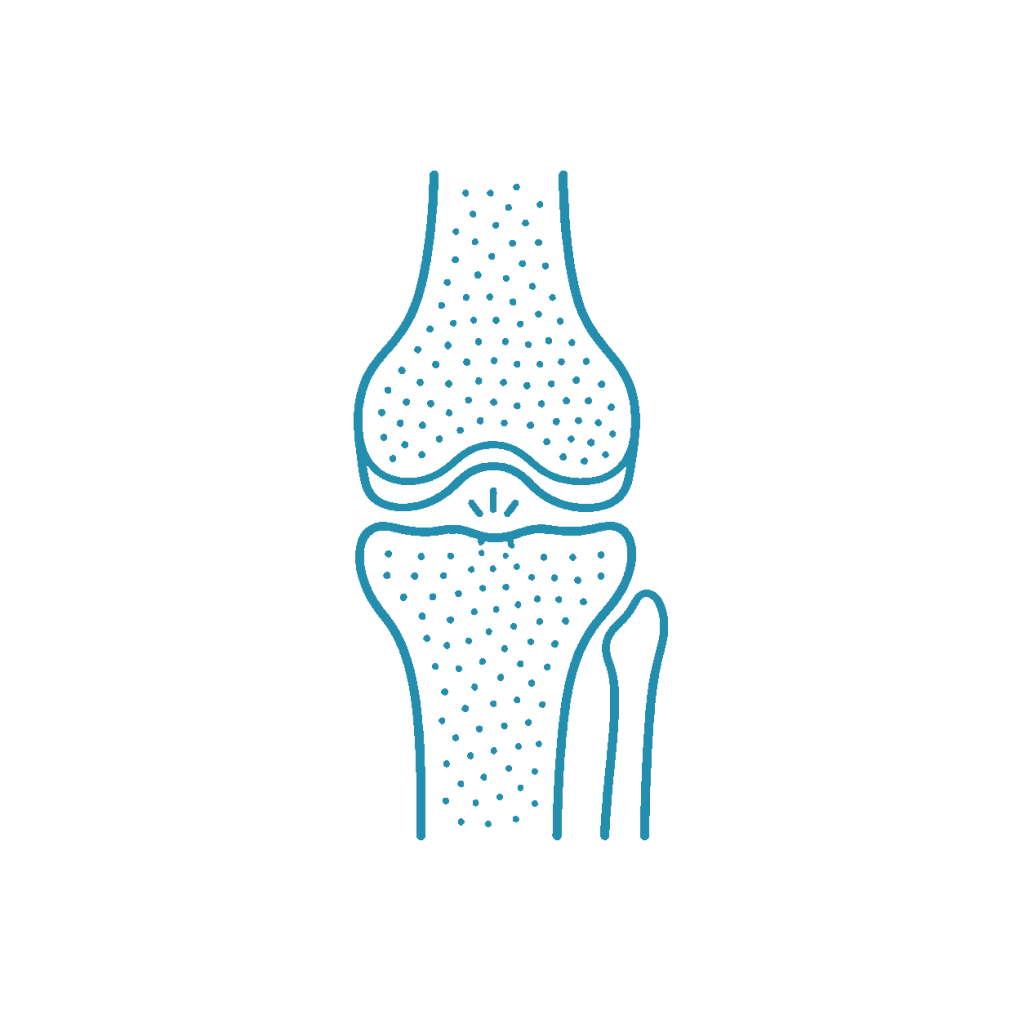
Bone & Bone Marrow
When cartilage wears thin, the bone underneath can bruise — blocking the nutrients cartilage needs to heal and accelerating the arthritic decline.

Joint Capsule & Synovium
The lining that produces joint fluid. It can become inflamed (synovitis) or tighten after injury, limiting motion and needing drainage.

Related Conditions
It often starts small — a little swelling after a long run, an occasional twinge going down stairs. Left alone, that same instability can wear down the meniscus and cartilage, bruise the bone underneath, and eventually settle into arthritis. The conditions below are less a menu of unrelated problems than different chapters of that same story, caught at different points.
Knee Pain
General pain, stiffness, or dysfunction in the knee.
Plantar Fasciitis
Stabbing heel pain, worst with the first steps in the morning.
Achilles Tendinitis
Aching or stiffness at the back of the heel, worse with activity.
Ankle Sprain (Ligament Injury)
Pain, swelling, or ongoing looseness following a rolled ankle.
Tarsal Tunnel Syndrome
Burning or tingling on the bottom of the foot from a compressed nerve.
Morton's Neuroma
Burning pain or a sense of a "pebble in your shoe" between the toes.
Foot & Ankle Arthritis
Stiffness and grinding pain that builds over time.
Stress Fracture
Focal pain that builds with activity and eases with rest, common in runners.
How Wellward Evaluates Ankle & Foot Pain
Foot and ankle pain can come from a dozen different structures packed into a small space, so we don't stop at the first guess. Every plan is built on four things:
Your Story
What activities bring it on, what you've already tried, and what getting your knee back would mean for your life.

Movement & Load
How you walk, squat, pivot, and climb — and which specific movements reproduce your pain or instability.

Structure & Imaging
We review your imaging in context, and when we need a closer look at your meniscus, ligaments, or cartilage, live ultrasound [→ /diagnostics/ (Diagnostic Ultrasound)] lets us see it directly.

Pain Mapping
Catching, swelling, and grinding can all overlap between the meniscus, ligaments, and cartilage, so we test each possible structure directly [→ /diagnostics/ (Pain Mapping)] with targeted diagnostic injections until we know exactly which one is responsible.
Treatment Pathways
Your plan comes from what Pain Mapping finds in your knee specifically — not a generic protocol for "bad knees."
Conservative
Rehab, hands-on manual therapy [→ /manual-movement-based-therapies/], and targeted strengthening resolve a lot of knee pain on their own. When more is needed, we add joint injections, bursa injections, or nerve blocks [→ /interventional-pain/] to calm things down and get you moving again.
Regenerative & Stem Cell Therapy
For the right candidate, we draw and prepare your own cells in-house, same day, and pair them with PRP and other orthobiologic injections [→ /regenerative-therapies/] to calm inflammation and support your knee's natural repair process. It isn't right for every diagnosis, which is why it's only offered once your evaluation confirms it's a genuine fit.
What Patients Experience
Real stories. Real outcomes.
Patient testimonial will be placed here.

Broader Support When Pain Goes Deeper
When knee pain is persistent or life feels limited, additional support can help.
Warrior Program
Advanced support for complex tissue, nervous system sensitization, and persistent pain.
Pain Coaching
One-on-one coaching to build resilience, improve habits, and restore confidence.

Neural Reset Program
A science-based program to calm the nervous system and reduce chronic pain signals.

Surgery or Urgent Evaluation
In some cases, surgery or urgent evaluation may be the safest or most appropriate path. We will help you understand all options
Common Questions About Knee Pain
Most new patients can schedule a discovery call within one business day. We know how derailing pain can be, so we work hard to get you seen within a week.
It depends on your diagnosis and what's recommended. Diagnostic and conservative care is often covered by insurance, while some regenerative and stem cell therapies are not. We'll walk through your options and costs on your discovery call, so there are no surprises before you start.
Yes. Imaging is a helpful piece of the picture, but it doesn't always explain pain. Some MRI findings — like mild meniscus fraying — show up in people with no symptoms at all. That's why we don't rely on imaging alone — it's one input into Pain Mapping, not the whole answer.
It depends on how advanced the arthritis is. Earlier-stage knee arthritis and cartilage wear often respond well to regenerative approaches, while bone-on-bone arthritis may need a different pathway. Your evaluation determines which stage you're actually in.
That's usually a sign of instability — often from a meniscus tear, a ligament sprain, or cartilage damage that's letting the joint shift more than it should. It's rarely just "in your head," and Pain Mapping can usually pinpoint which structure is responsible.
Usually only when there's significant meniscus or ligament damage, advanced arthritis, or when conservative and regenerative care genuinely hasn't moved the needle. Every case is different, and we'll be straight with you about which one you're in.
Ready to Understand What Is Driving Your Knee Pain?
Take the next step toward lasting relief.Take the Readiness Quiz
Find out if our approach is right for your condition.
Schedule a Discovery Call
Talk with our team and get answers to your questions.
Ready to Find Out What's Really Driving Your Knee Pain?
Take the next step toward taking the stairs two at a time again.