
SPINE CONDITION

Neck & Cervical Pain

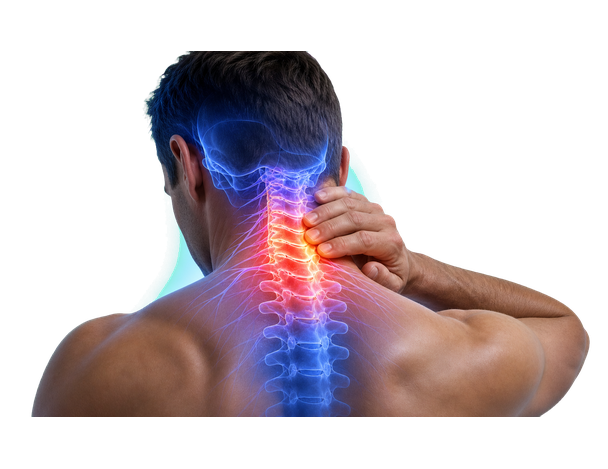
Neck pain has a way of shrinking your world — the head check you used to make without thinking before changing lanes, the phone tucked against your shoulder, a pillow that used to feel fine. It can come from the discs, joints, nerves, or muscles that make up your cervical spine, and for most people it fades in a week or two — but when it doesn't, treatment often starts before anyone figures out exactly what's driving it. Small changes can be the starting point of bigger problems years down the road, and treating your neck upstream — before a disc or joint fully breaks down — can change that trajectory and keep surgery off the table. At Wellward, we don't guess based on where it hurts or what the MRI shows. We find the real source first.

Does This Sound Familiar?

Neck pain can feel like a dull ache, a sharp catch when you turn your head, or a tension headache that creeps up the back of your skull. It can radiate into your shoulder or down your arm, or show up as numbness in your fingers.

It doesn't just change how you move. It changes how you drive, how you sleep, how long you can look at a screen before you have to stop. When you start avoiding ordinary things because your neck might not cooperate, it's time to get answers.

If several of the statements feel familiar, the next step is not guessing. It may be time for a more complete evaluation of what is actually driving your pain.

Do you…

If a couple of these feel familiar, the next step isn't guessing — it's a real answer.

  • Get a jolt of pain shelving dishes, changing a lightbulb, or reaching into the back seat of your car?
  • Avoid conversations on a plane, in a car, or at the dinner table because turning your head is too painful?
  • Turn your whole body instead of your head to check a blind spot?
  • Wake up with your neck locked, unable to turn one direction?
  • Feel pain, tingling, or numbness run into your shoulder, arm, or hand?

What Causes Neck Pain?

Neck pain rarely comes from one thing. Years of looking down at a phone or screen, an old whiplash injury, or simple wear on the discs and joints can quietly overload your neck — until one day something tips over into pain that won't let up.

Once that happens, your body starts protecting itself: holding your shoulders tighter, turning your whole trunk instead of your neck, sleeping differently. That's a smart short-term response, but over time it just moves the strain somewhere else — often into your shoulders or the base of your skull. And confusingly, where you feel it may not be where the real problem is.

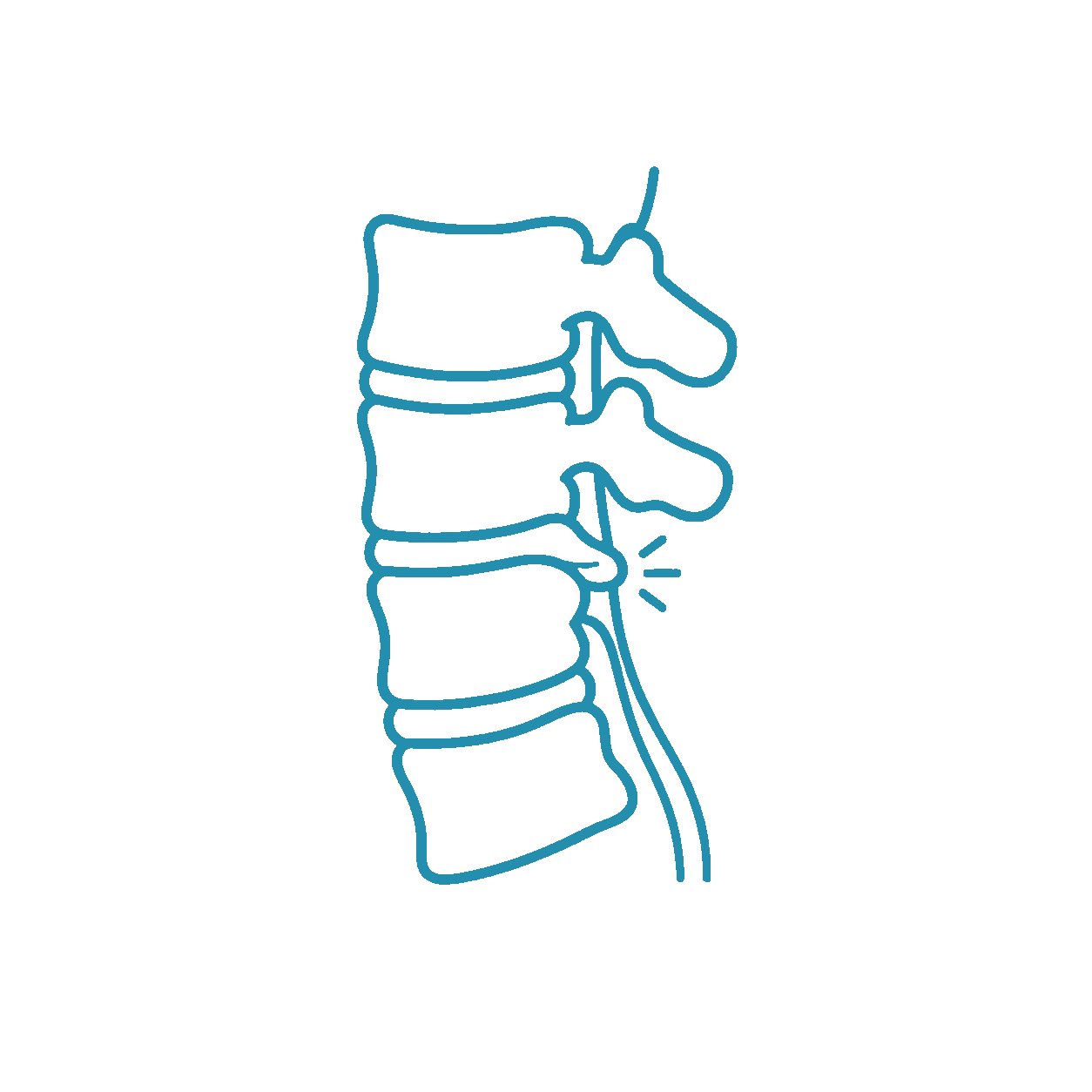
Disc-Related Pain

Bulging or degenerated discs in the cervical spine that irritate nearby nerves or lose their ability to absorb load.
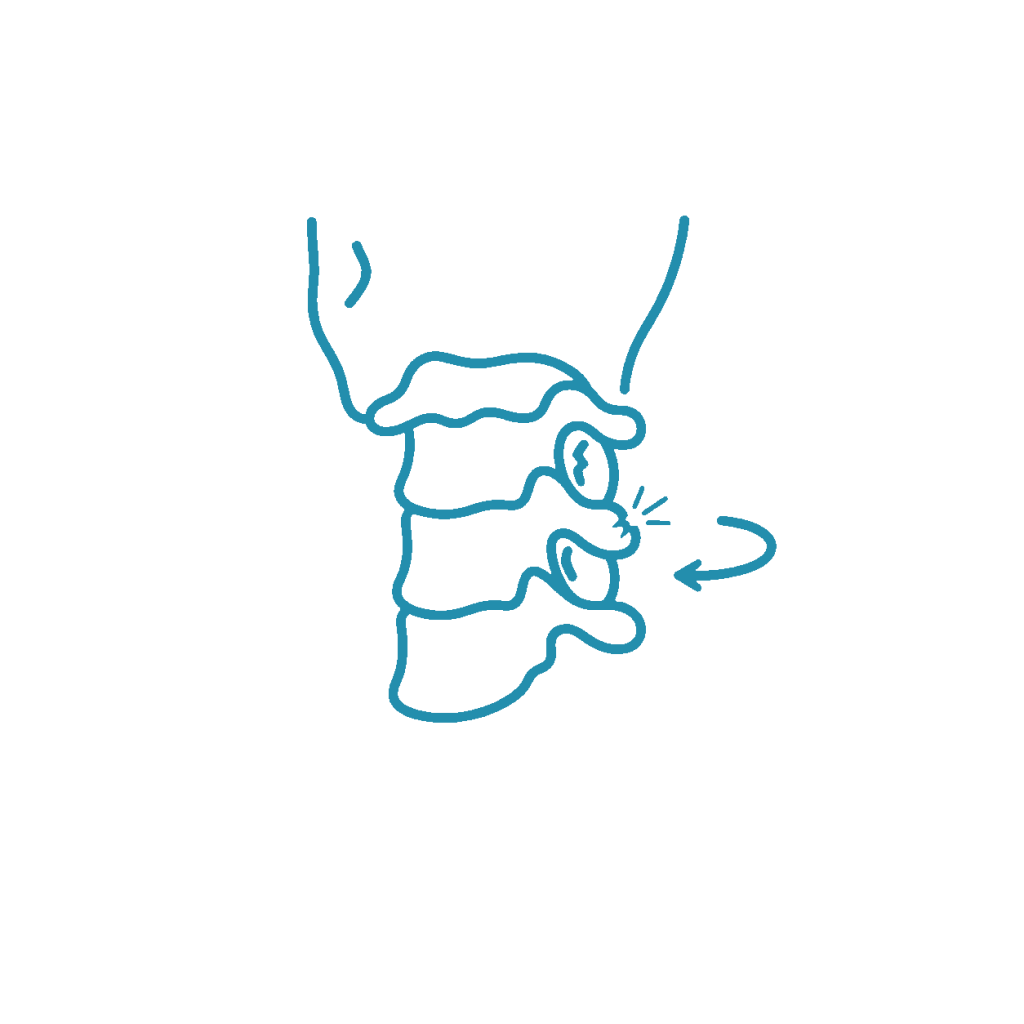
Facet Joint Pain

Wear or inflammation in the small joints that let your neck rotate and tilt, often worse looking up or turning.
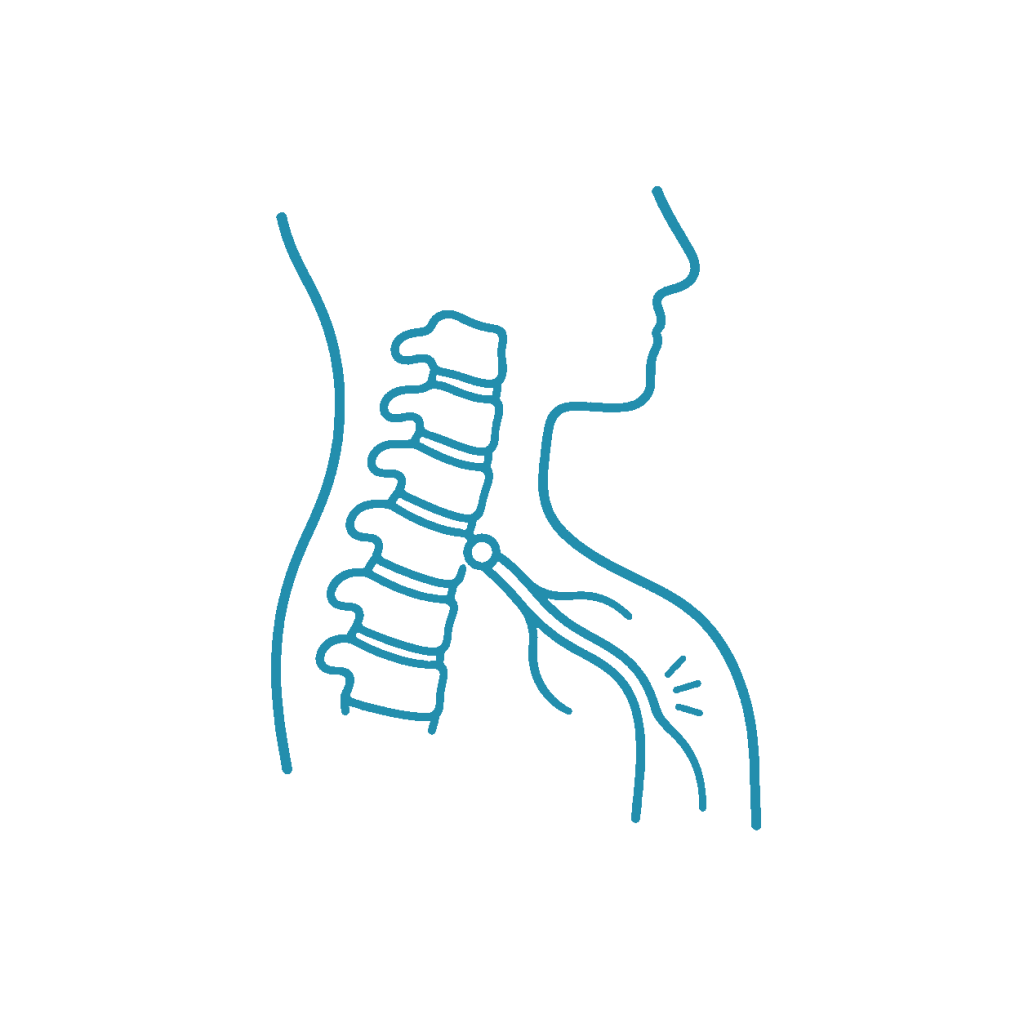
Nerve Irritation (Radiculopathy)

Compression or inflammation of a nerve in the neck that sends pain, tingling, or numbness into the shoulder, arm, or hand.
Whiplash & Soft Tissue Injury

Strain to the ligaments and muscles from a sudden jolt, like a car accident or fall.
Muscle Spasms & Tension

Tight, guarded muscles compensating for an underlying problem, often felt across the shoulders.
Posture & Movement Load ("Tech Neck")

Hours spent looking down at phones, laptops, and screens that quietly overload the neck over time.

Related Conditions

Neck pain isn't one diagnosis — it's an umbrella that covers disc problems, facet joint pain, pinched nerves, and simple muscle strain, and they can feel frustratingly similar. That overlap is exactly why so many people end up on a revolving door of muscle relaxers and steroid injections that ease pain for a while without ever addressing what's actually wrong.

Neck Pain

General pain, stiffness, or dysfunction in the cervical spine.

Learn More

Cervical Herniated Disc

Pain after a sudden movement or strain, often with tingling or numbness down the arm.

Learn More

Cervical Radiculopathy

A pinched nerve in the neck causing pain, weakness, or numbness that travels into the shoulder, arm, or hand.

Learn More

Cervical Facet Pain

Localized stiffness and pain, often worse turning or tilting your head.

Learn More

Cervical Spinal Stenosis

Narrowing around the spinal cord or nerves, sometimes causing clumsiness in the hands or an unsteady walk.

Learn More

Cervical Degenerative Disc Disease

Gradual stiffness and recurring flare-ups from disc breakdown over time

Learn More

Whiplash / Cervical Strain

Neck pain and stiffness following a car accident, fall, or sudden jolt.

Learn More

Cervicogenic Headache

A headache that actually starts in the neck, often felt at the base of the skull or behind one eye.

Learn More

How Wellward Evaluates Neck Pain

Guessing isn't a treatment plan. Before we recommend anything, we look at your neck from four angles:

Your Story

What you've already tried, what's changed since this started, and what getting your neck back would actually mean for your day-to-day.

Movement & Load

We watch how your neck actually moves — which directions are limited, and which specific motions bring the pain on.

Structure & Imaging

Your imaging gets reviewed in context, not just read in isolation — and when we need a closer look at a disc, joint, or nerve, we can add live ultrasound [→ /diagnostics/ (Diagnostic Ultrasound)] right in the room.

Pain Mapping

Rather than guess between a disc, a joint, or a nerve, we test each one directly [→ /diagnostics/ (Pain Mapping)] — numbing specific structures until we find exactly which one is responsible. Proof, not a guess.

Treatment Pathways

Once we know what's actually wrong, your plan follows from there — never the other way around.

Conservative

If that's not enough on its own, we layer in more targeted options — nerve blocks, epidurals, or joint injections [→ /interventional-pain/] — to break the cycle and get you moving again.

Regenerative & Stem Cell Therapy

For the right candidate, we can draw your own cells same-day — no donor tissue, no outside lab — and combine them with PRP or other orthobiologic injections [→ /regenerative-therapies/] to calm inflammation and support real tissue repair. It's not the right fit for every neck condition, which is exactly why we only offer it once your evaluation says it should work.

What Patients Experience

Real stories. Real outcomes.

Patient testimonial will be placed here.

John Carter
Businessman

Patient testimonial will be placed here.

John Carter
Businessman

Broader Support When Pain Goes Deeper

Global module — see style guide for card links. Only the intro line below is neck-specific.

When neck pain is persistent or life feels limited, additional support can help.

Warrior Program

Advanced support for complex tissue, nervous system sensitization, and persistent pain.

Learn More

Pain Coaching

One-on-one coaching to build resilience, improve habits, and restore confidence.

Learn More

Neural Reset Program

A science-based program to calm the nervous system and reduce chronic pain signals.

Learn More

Surgery or Urgent Evaluation

In some cases, surgery or urgent evaluation may be the safest or most appropriate path. We will help you understand all options

Learn More

Common Questions About Neck & Cervical Pain

Can an MRI be normal with neck pain?

Yes. Imaging is a helpful piece of the picture, but it doesn't always explain pain. Some painful structures don't show clearly on MRI, and some MRI findings show up in people with no symptoms at all. That's why we don't rely on imaging alone — it's one input into Pain Mapping, not the whole answer.

How much does ankle or foot pain treatment cost, and is it covered by insurance?

It depends on your diagnosis and what's recommended. Diagnostic and conservative care is often covered by insurance, while some regenerative and stem cell therapies are not. We'll walk through your options and costs on your discovery call, so there are no surprises before you start.

Can an MRI be normal with ankle or foot pain?

Yes. Imaging is a helpful piece of the picture, but it doesn't always explain pain. Tendon and nerve problems especially can be present without showing up clearly on MRI. That's why we don't rely on imaging alone — it's one input into Pain Mapping, not the whole answer.

Does stem cell therapy work for plantar fasciitis or Achilles tendon pain?

For the right candidate, yes — these are tendon and connective tissue problems that often respond well to regenerative approaches, since healing is the actual issue, not just inflammation. It's still evaluated case by case to confirm it's the right fit.

Why does my ankle still feel unstable years after a sprain?

Ligaments don't always heal back to their original tightness after a sprain, which can leave the joint looser than it should be. Left alone, that looseness accelerates wear on the cartilage and other structures — which is exactly why it's worth evaluating even years later.

Ready to Understand What Is Driving Your Neck & Cervical Pain?

Take the next step toward lasting relief.

Take the Readiness Quiz

Find out if our approach is right for your condition.

Schedule a Discovery Call

Talk with our team and get answers to your questions.

Ready to Find Out What's Really Driving Your Ankle or Foot Pain?

Take the next step toward mornings that don't start with wincing.