
TMS & Integrated
Psychiatric Care
When depression has not improved enough with medication—or medication side effects make treatment difficult—TMS offers a non-systemic option that does not require sedation, anesthesia, or daily medication exposure.
Transcranial magnetic stimulation uses focused magnetic pulses to activate brain regions involved in mood regulation. Treatment is delivered while you remain awake and can usually return to normal activities immediately afterward.
How TMS Works
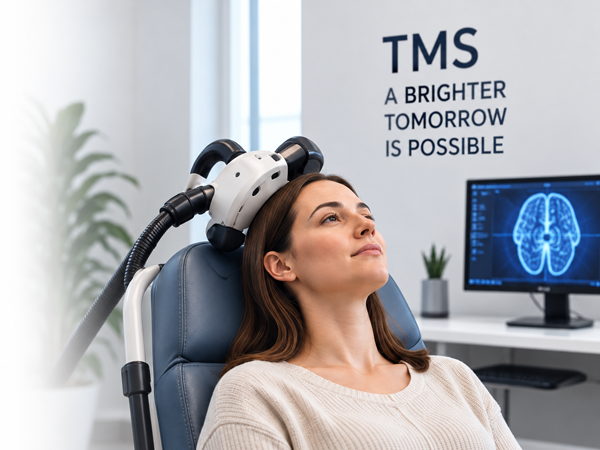
A treatment coil is positioned against the scalp and delivers repeated magnetic pulses to a targeted area of the brain. These pulses influence the brain networks involved in mood, motivation, attention, and emotional regulation.
What Treatment Is Like
TMS is performed in the office without sedation. You sit in a treatment chair while the coil rests against the scalp. A typical session lasts approximately 5–20 minutes, and most patients can drive, work, and return to their usual activities afterward.
Who May Consider TMS
TMS may be considered for people with depression that has not improved with medication, difficulty tolerating side effects, a preference for a non-systemic option, depression with chronic pain or medical illness, or persistent symptoms despite treatment.
Treatment Schedule
TMS is delivered as a series of sessions, commonly several days per week over multiple weeks, followed by a gradual taper or individualized maintenance plan. Consistency matters because the effect builds over time.
What Improvement May Look Like
Early changes may include more energy or motivation, better concentration, improved sleep or daily structure, less emotional heaviness, greater interest in relationships or activities, and a reduced sense that every task requires excessive effort.
Some patients notice change within the first few weeks, while others improve later in the treatment series. Progress is evaluated through symptoms, function, and the ability to re-engage with daily life.
When It May Not Be the Right Fit
TMS may not be appropriate for people with certain implanted metallic or electronic devices near the head, an unstable seizure disorder, or another neurologic or medical condition. It is also not a substitute for emergency psychiatric care. A detailed review helps determine whether TMS is appropriate.
Integrated Psychiatric Care
TMS works best as part of a clear treatment plan that may also include medication management, psychotherapy, sleep treatment, movement, pain care, and attention to medical conditions affecting mood and function.
Risks and Limitations
Scalp sensitivity, headache, or facial muscle twitching can occur and often lessen over time. Not everyone responds to TMS, and the effect builds over a series of treatments. More significant complications, including seizure, are rare and are reviewed during screening.
Frequently Asked Questions
No. You remain awake throughout treatment, and there is no routine recovery period afterward.
No. TMS uses focused magnetic pulses and does not require anesthesia or intentionally produce a seizure. Electroconvulsive therapy is a different treatment generally used for severe or urgent psychiatric conditions.
Some patients notice early changes within a few weeks, while others improve later in the treatment course. Response is gradual and varies by person.
Often, yes. Medication decisions are individualized and should be coordinated with the prescribing clinician. TMS may be used alongside medication or when medication has been difficult to tolerate.
The response is reviewed near the end of the series. Some patients transition back to routine psychiatric care, while others may consider taper sessions, maintenance treatment, or a future repeat course.
Looking for Another Path Through Depression?
TMS may offer a non-systemic treatment option when medication has not been enough or has been difficult to tolerate.