

SPINE CONDITION

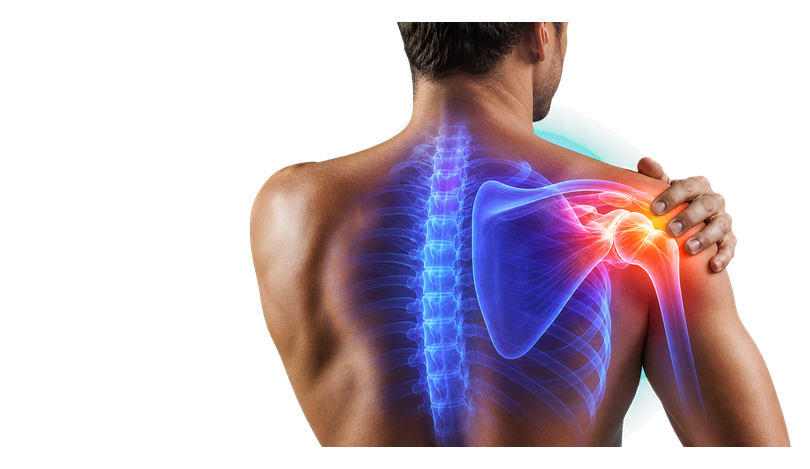
Shoulder Pain

Shoulder pain has a way of shrinking your reach — the top shelf you used to grab without thinking, the seatbelt you used to reach without wincing, a full night's sleep without waking up on the wrong side. It can come from the rotator cuff, labrum, joint surfaces, or capsule that make up your shoulder, and it's one of the most common reasons people put off care, because it's easy to blame "just getting older" before anyone figures out exactly what's going on. But small changes can be the starting point of arthritis in a few years, and treating it upstream of an end-stage shoulder can change the trajectory and prevent the need for surgery or joint replacement. At Wellward, we don't guess based on where it hurts or what the MRI shows. We find the real source first.

Does This Sound Familiar?

Shoulder pain can feel like a deep ache, a sharp catch when you reach overhead, or a grinding sensation when you rotate your arm. It can wake you up when you roll onto it, or make itself known the moment you reach behind your back.

It doesn't just change how you move. It changes how you dress, how you drive, how you carry your kids or your groceries. When you start avoiding ordinary things because your shoulder might not cooperate, it's time to get answers.

If several of the statements feel familiar, the next step is not guessing. It may be time for a more complete evaluation of what is actually driving your pain.

Do you…

If several of these feel familiar, the next step isn't guessing — it's a real answer.

  • Avoid reaching overhead to grab something off a shelf?
  • Wake up at night because you rolled onto that shoulder?
  • Struggle to reach behind your back — a zipper, a bra clasp, a back pocket?
  • Feel your shoulder catch, click, or give way during normal movement?
  • Feel like no one has fully explained why you feel as bad as you do?

What Causes Shoulder Pain?

Shoulder pain rarely comes from one thing. An old injury, repetitive overhead motion, or simple wear on the rotator cuff and joint surfaces can quietly overload your shoulder — until one day something tips over into pain that won't let up.

Once that happens, your body starts protecting itself: favoring your other arm, avoiding certain reaches, changing how you sleep. That's a smart short-term response, but over time it just moves the strain somewhere else — often into your neck or your other shoulder. And confusingly, where you feel it may not be where the real problem is.

Bursa

A fluid-filled cushion between your rotator cuff and the bone above it. Irritation here (bursitis) is often the earliest, most treatable sign that something's off — before it progresses to real tendon or cuff damage.

Rotator Cuff Tendons

Four tendons that act like rubber bands, translating your muscles' pull into arm movement. Repetitive strain or a tear here is one of the most common sources of shoulder pain.

Ligaments

The stabilizers that help keep your shoulder centered in its socket. When they're injured or become lax, the joint starts to "wiggle" with movement — wearing down everything around it faster.

Labrum

The cartilage lip that deepens your shoulder socket. Tears here make the joint less stable, which — left alone — accelerates wear on the structures around it.

Cartilage

The smooth buffer between bone and bone. Once the joint is unstable, cartilage erodes faster than it can recover, and repeated impact can bruise the bone beneath it.

Bone & Bone Marrow

When cartilage wears thin, the bone underneath can bruise — which blocks the nutrients cartilage needs to repair itself, accelerating the damage rather than just reflecting it.

Joint Capsule

The sac that surrounds the joint. It can thicken and tighten over time, steadily choking off your range of motion — this is what happens in a frozen shoulder.

Related Conditions

It often starts small — a strained tendon, a little bursitis after a rough week at the gym or on a ladder. Left alone, that same instability can wear down the labrum and cartilage, bruise the bone underneath, and eventually stiffen into a frozen shoulder or full-blown arthritis. The conditions below are less a menu of unrelated problems than different chapters of that same story, caught at different points.

Shoulder Pain

General pain, stiffness, or dysfunction in the shoulder.

Learn More

Rotator Cuff Tear

Pain and weakness with lifting or reaching overhead, often worse at night.

Learn More

Shoulder Impingement Syndrome

Pinching pain with overhead motion that can progress to a rotator cuff tear if ignored.

Learn More

Labral Tear (SLAP Tear)

Catching, popping, or a sense that the shoulder isn't stable.

Learn More

Shoulder Arthritis

Deep, grinding stiffness that limits how far you can move your arm.

Learn More

Frozen Shoulder

Progressive stiffness and loss of motion, often following an injury or a period of immobility.

Learn More

AC Joint Injury or Arthritis

Pain right at the top of the shoulder, often worse reaching across your body.

Learn More

Shoulder Instability

A shoulder that feels loose, slips, or has dislocated before.

Learn More

How Wellward Evaluates Shoulder Pain

We don't jump to treatment before we know what's actually driving your pain — not just where it is, but why. Every plan is built on four things:

Your Story

Your full history — what's been tried, what matters to you, what you want to get back to.

Movement & Load

How you move your shoulder, and which motions reproduce your symptoms.

Structure & Imaging

We review your imaging in context, sometimes adding live ultrasound [→ /diagnostics/ (Diagnostic Ultrasound)] to get a clearer look at your rotator cuff, labrum, joint surfaces, and soft tissue.

Pain Mapping

Our process for testing each possible cause directly [→ /diagnostics/ (Pain Mapping)] — numbing specific structures one at a time with diagnostic injections until we find the one actually responsible. Not a guess. Proof.

Treatment Pathways

There's no default prescription here — your plan comes from what Pain Mapping actually finds, not a standard protocol everyone gets.

Conservative

Most shoulders respond well to rehab and hands-on manual therapy [→ /manual-movement-based-therapies/] on their own — targeted strengthening, restoring range of motion, retraining how you move. When that's not enough by itself, we bring in more focused options like joint injections, bursa injections, or nerve blocks [→ /interventional-pain/] to quiet things down and keep you progressing.

Regenerative

Some shoulders need more than rest and rehab to actually heal — that's where regenerative options come in. When you're a good candidate, we draw your own cells same-day, no donor tissue involved, and combine them with PRP or other orthobiologic injections [→ /regenerative-therapies/] to give your rotator cuff, labrum, or joint real support in repairing itself. It's reserved for cases where your evaluation shows it'll genuinely help — not offered by default.

What Patients Experience

Real stories. Real outcomes.

Patient testimonial will be placed here.

John Carter
Businessman

Patient testimonial will be placed here.

John Carter
Businessman

Broader Support When Pain Goes Deeper

When shoulder pain is persistent or life feels limited, additional support can help.

Warrior Program

Advanced support for complex tissue, nervous system sensitization, and persistent pain.

Learn More

Pain Coaching

One-on-one coaching to build resilience, improve habits, and restore confidence.

Learn More

Neural Reset Program

A science-based program to calm the nervous system and reduce chronic pain signals.

Learn More

Surgery or Urgent Evaluation

In some cases, surgery or urgent evaluation may be the safest or most appropriate path. We will help you understand all options

Learn More

Common Questions About Shoulder Pain

Can an MRI be normal with shoulder pain?

Yes. Imaging is a helpful piece of the picture, but it doesn't always explain pain. Some painful structures don't show clearly on MRI, and some MRI findings — like a partial rotator cuff tear — show up in people with no symptoms at all. That's why we don't rely on imaging alone — it's one input into Pain Mapping, not the whole answer.

Does stem cell therapy work for shoulder pain?

For the right candidate, it can meaningfully support healing — but it's not for every patient or every diagnosis. Stem cell and other regenerative therapies are considered only after your evaluation confirms your tissue quality, diagnosis, and goals actually support that approach.

How do I know if my shoulder pain is coming from the rotator cuff, labrum, or joint?

Honestly, you often can't tell from symptoms alone — rotator cuff tears, labral tears, and arthritis can all cause similar catching, aching, or weakness. That's what Pain Mapping is for: testing each possibility directly instead of guessing.

Is shoulder surgery ever necessary?

Usually only when there's a large or worsening rotator cuff tear, significant instability, advanced arthritis, or when conservative and regenerative care genuinely hasn't moved the needle. Every case is different, and we'll be straight with you about which one you're in.

How much does shoulder pain treatment cost, and is it covered by insurance?

It depends on your diagnosis and what's recommended. Diagnostic and conservative care is often covered by insurance, while some regenerative and stem cell therapies are not. We'll walk through your options and costs on your discovery call, so there are no surprises before you start.

How soon can I get in to be seen?

Most new patients can schedule a discovery call within one business day. We know how derailing pain can be, so we work hard to get you seen within a week.

Ready to Understand What Is Driving Your Shoulder Pain?

Take the next step toward lasting relief.

Take the Readiness Quiz

Find out if our approach is right for your condition.

Schedule a Discovery Call

Talk with our team and get answers to your questions.

Ready to Find Out What's Really Driving Your Shoulder Pain?

Take the next step toward reaching overhead without thinking twice.