
BVNA (Basivertebral
Nerve Ablation)
BVNA (Basivertebral Nerve Ablation) treats chronic low-back pain arising from damaged vertebral endplates—a distinct source of pain that differs from a herniated disc, muscle strain, or facet-joint problem.
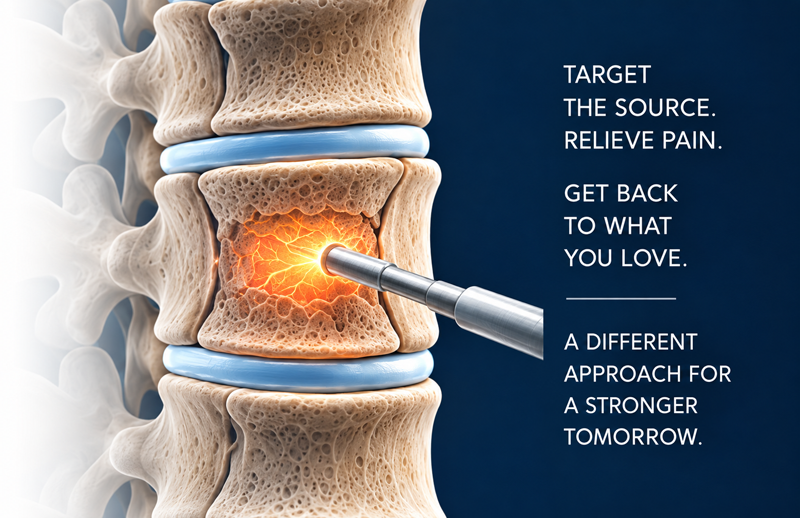
What Is BVNA?
BVNA targets the basivertebral nerve, which carries pain signals from damaged vertebral endplates. Using imaging guidance, a specialized probe delivers radiofrequency energy inside the vertebral body to interrupt the nerve’s ability to transmit pain.
What It’s Designed to Do
• Disable the specific nerve carrying pain signals from a damaged vertebral endplate
• Address back pain arising from damaged endplates—a distinct cause from disc, muscle, or facet-joint pain
• Provide long-term relief without an implant
When It May Be Appropriate
• Chronic low-back pain lasting 6 months or more, making it hard to stand or bend
• MRI findings showing Modic changes or endplate swelling
• Conservative treatment hasn’t provided adequate relief
When It May Not Be the Right Fit
• Back pain driven by another confirmed source—disc herniation, facet joint, or muscular strain
• No supportive MRI findings of endplate change
• Not the primary treatment for generalized low-back pain without endplate involvement
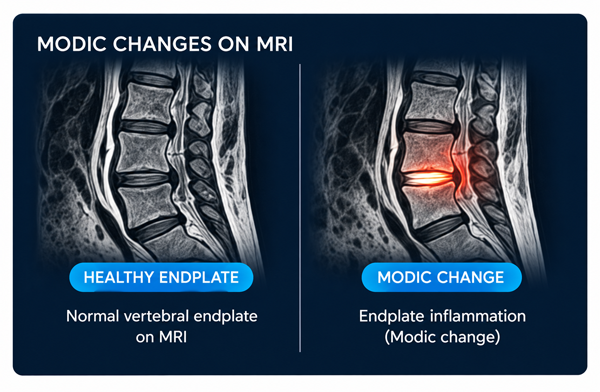
How This Fits Into a Broader Plan
BVNA specifically targets vertebral endplate pain, which can coexist with or be mistaken for other back problems. Imaging and diagnostic mapping help confirm that this is the relevant source before proceeding.
Could Regenerative Care Help?
BVNA interrupts pain signals from damaged vertebral endplates, but it does not directly treat inflammation within the vertebral bone or repair the adjacent disc. In selected patients, intraosseous BMAC may be considered alongside BVNA to support the injured bone environment. Outcomes are still being researched, so this approach requires a careful discussion of uncertainty, cost, and alternatives.
Risks and Limitations
BVNA works only when vertebral endplate pain is an important contributor. Modic changes on MRI do not automatically mean the endplates are the source of pain. The treatment interrupts pain signaling but does not rebuild the disc, and some patients need treatment of more than one structure. Temporary increased back pain can occur. Bleeding, infection, or nerve injury are uncommon but possible.
Related Conditions
Chronic Low
Back Pain
Modic Changes
Degenerative
Disc Disease
Lumbar Spinal
Stenosis
Facet Joint
Arthritis
Muscle Strain
Other Conditions
Frequently Asked Questions
Vertebrogenic pain comes specifically from damaged vertebral endplates, not the disc itself or surrounding muscle—it’s identified through specific MRI findings (Modic changes) and can respond differently to treatment than other causes of back pain.
Published long-term studies have shown sustained improvement through several years post-procedure for appropriately selected patients—we’ll discuss what’s realistic for your specific case.
Ready to Find Out If BVNA (Basivertebral Nerve Ablation) Fits Your Diagnosis?
A thorough evaluation can determine whether BVNA is the right option for you.