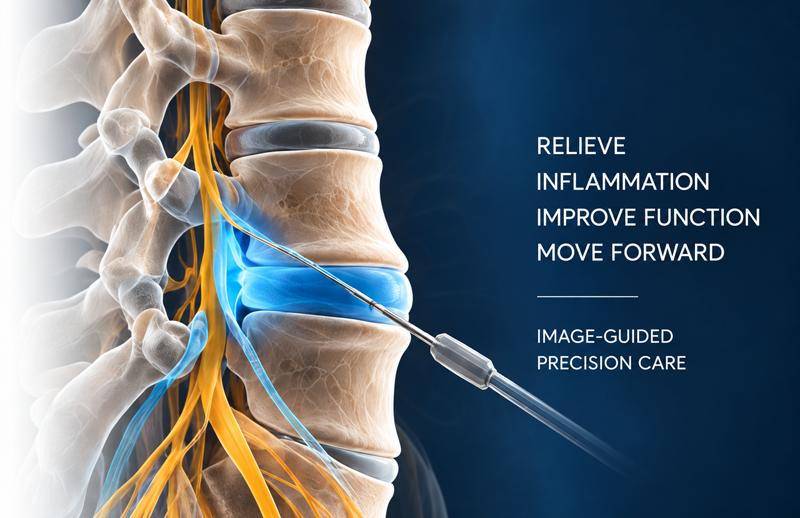
A disc herniation, bone spur, or narrowed foramen can irritate a spinal nerve and produce pain that travels into an arm or leg. An epidural injection places medication in the space around that disc and nerve—not into the spinal cord—to reduce inflammation and create a window for recovery.
Medication is directed toward a specific exiting nerve root and disc. This route can be especially useful when symptoms and imaging point to one level or side.
Interlaminar Epidural
Medication is placed through the back of the epidural space and may spread across a broader region. It can be considered when symptoms are less focal or involve spinal stenosis.
Caudal Epidural
The epidural space is entered through the sacral hiatus. This route may be useful after surgery, with pelvic symptoms, or when access at another level is less favorable.
What It Is Designed to Do
Clarify whether the suspected spinal level matches the symptoms
Reduce inflammation around an irritated or compressed nerve root
Decrease radiating arm or leg pain, tingling, or nerve-related discomfort
Create enough relief to advance movement, sleep, and rehabilitation
What It Does Not Fix
An epidural does not remove a large disc fragment, reverse severe stenosis, restore spinal stability, or permanently repair a damaged disc. Its value may extend beyond temporary relief, however, by helping to clarify the source of pain and guide the next step—whether that is MILD, BVNA, regenerative treatment, or surgical evaluation.
Could Regenerative Care Help?
When a damaged disc, ligament, facet capsule, or other structure remains capable of healing, regenerative options such as PRP, platelet lysate, or BMAC may be considered. For selected patients, an epidural and regenerative care can be part of a broader plan.
When Urgent Evaluation Comes First
Progressive weakness, bowel or bladder changes, saddle numbness, fever, suspected infection, or severe neurologic loss requires urgent assessment rather than a routine injection.
Risks and Limitations
Temporary soreness, flushing, headache, numbness, or a short increase in symptoms can occur. Serious complications such as bleeding, infection, medication reactions, or nerve injury are uncommon. Relief is often temporary and depends on the diagnosis and underlying condition.
There is no useful one-size-fits-all number. Frequency should depend on the diagnosis, medication exposure, quality and duration of benefit, and whether the injection is helping you make meaningful functional gains.
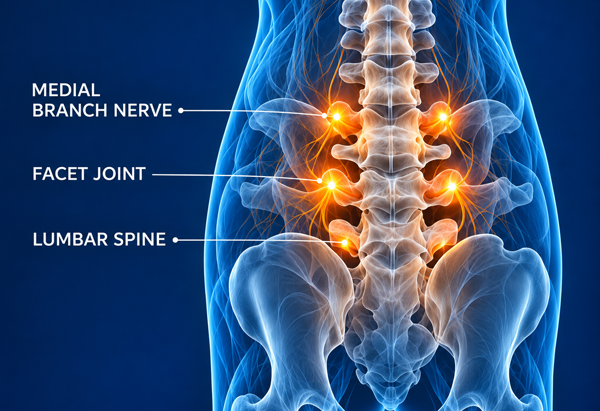
The radiating pain may come from the nerve root while the back pain comes from the disc, facet, SI region, muscle, or another structure. That difference can improve the pain map.
Is the Goal Relief—or a Better Recovery Window?
The best epidural is one that helps the next phase of care move forward rather than becoming an endless maintenance cycle.