
Peripheral Nerve Blocks,
Hydrodissection &
Ablation
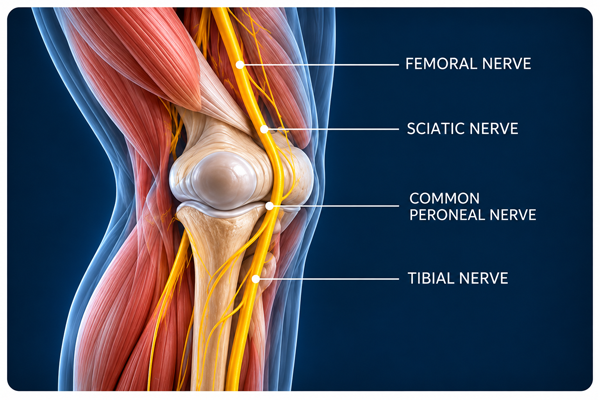
Localized nerve pain can feel burning, electric, sharp, hypersensitive, tingling, or strangely numb. A painful nerve may be carrying the pain signal, trapped or tethered by surrounding tissue, or remain overly sensitive after an injury or surgery. The right procedure depends on which of these problems is actually present.
Nerve Block
Is This Nerve Carrying the Pain?
A small amount of numbing medication is placed near a carefully selected nerve under image guidance. The response helps determine whether that nerve explains enough of your familiar pain to guide the next step. A block may also provide temporary relief.
Hydrodissection
Is the Nerve Stuck or Compressed?
Nerves are designed to glide as the body moves. Scar tissue, fascia, muscle, tendon, or a tight tunnel can restrict that motion. Using live ultrasound, fluid is placed around the nerve to create space and help restore more normal glide. The goal is mechanical freedom—not simply numbness.
Ablation
Would Reducing the Signal Provide Longer Relief?
When a diagnostic block clearly identifies a sensory nerve and longer relief is appropriate, an ablation procedure may be considered to reduce pain signaling for a longer period. Not every nerve is safe to ablate, particularly when it also controls important muscle function or sensation.
When It May Be Considered
- Localized burning, electric, tingling, or hypersensitive pain
- Post-surgical or post-traumatic nerve pain
- Scar-related nerve tethering or entrapment
- Carpal tunnel, cubital tunnel, tarsal tunnel, or similar compression patterns
- A diagnostic question before a longer-lasting nerve procedure
- Pain that follows the distribution of a specific peripheral nerve
Could Regenerative Care Help?
When a nerve remains irritated by its local environment, platelet lysate may be considered in selected cases. Hydrodissection may also use a fluid selected to improve glide. Treating a nearby joint, tendon, ligament, or scar-related structure may be just as important as treating the nerve itself.
Risks and Limitations
Temporary numbness, weakness, soreness, bruising, or a brief increase in nerve symptoms can occur. Treating the nerve does not always correct the underlying cause. Hydrodissection may create space without fully resolving compression, and a successful block does not automatically mean ablation is the best next step. More serious complications such as bleeding, infection, medication reaction, or nerve injury are uncommon.
Common Conditions We Treat
Syndrome
Syndrome
Syndrome
Syndromes
Nerve Injury
Frequently Asked Questions
A nerve block mainly tests or reduces pain signaling. Hydrodissection uses fluid and precise placement to create space around a nerve that appears trapped, tethered, or compressed.
No. The nerve involved, duration of relief, diagnosis, and your goals all matter. Hydrodissection, rehabilitation, regenerative treatment, PNS, or another pathway may make more sense.
Some patients improve after one procedure; others need staged treatment or treatment of more than one contributor. The response depends on the nerve, severity of irritation, and whether the underlying cause can also be addressed.
Could a Specific Nerve Be Driving the Pain—
or Be Stuck in the Healing Process?
A focused nerve evaluation can help determine which question needs to be answered.