
INTERVENTIONAL CARE—NECK & SPINE
Sacroiliac &
Tailbone Pain Care
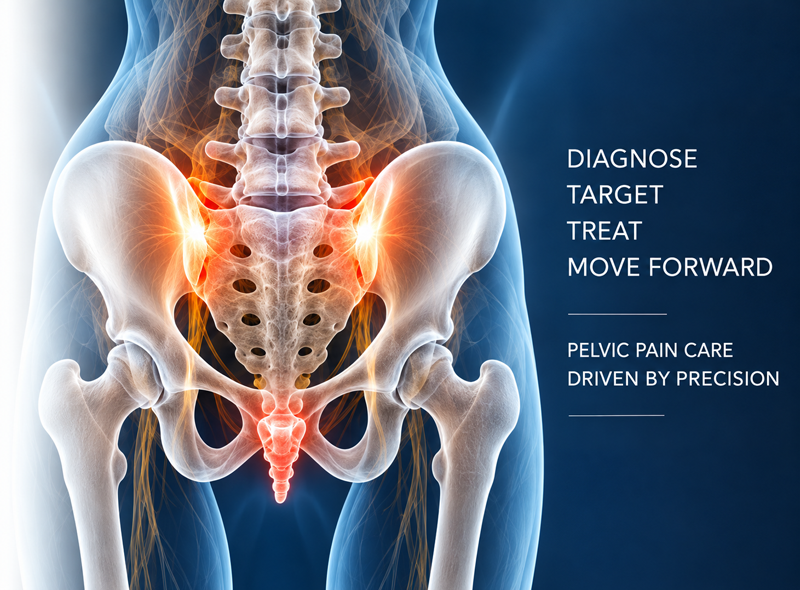
Pain near the beltline, buttock, tailbone, or lower sacrum is often labeled “low-back pain,” even when the pelvis is the real source. The sacroiliac joints transfer force between the spine and legs, while the surrounding ligaments stabilize the pelvis through walking, lifting, rotation, and pregnancy-related changes. Because several pain-producing structures are packed closely together, accurate mapping is essential.
Sacroiliac Joint Injection
Medication is placed into the SI joint under imaging to test whether the joint surface is contributing and, when appropriate, reduce inflammation.
Sacral Lateral Branch Blocks & RFA
Diagnostic blocks can test whether the sensory nerves carrying pain from the back of the SI region are involved. When the response is strong, radiofrequency treatment may provide longer relief.
Sacroiliac Ligament Injections
Targeted injections can help identify painful ligaments such as the posterior SI, interosseous, iliolumbar and sacrotuberous ligaments, with options for regenerative treatment when healing remains incomplete.
Sacrococcygeal or Coccygeal Injection
A focused injection can help identify the painful structure in the tailbone region and guide next steps, including rehabilitation or regenerative treatments such as PRP.
Ganglion Impar Block
Targets a small nerve bundle in front of the coccyx. May be considered for selected coccygeal, perineal, rectal, or pelvic pain patterns.
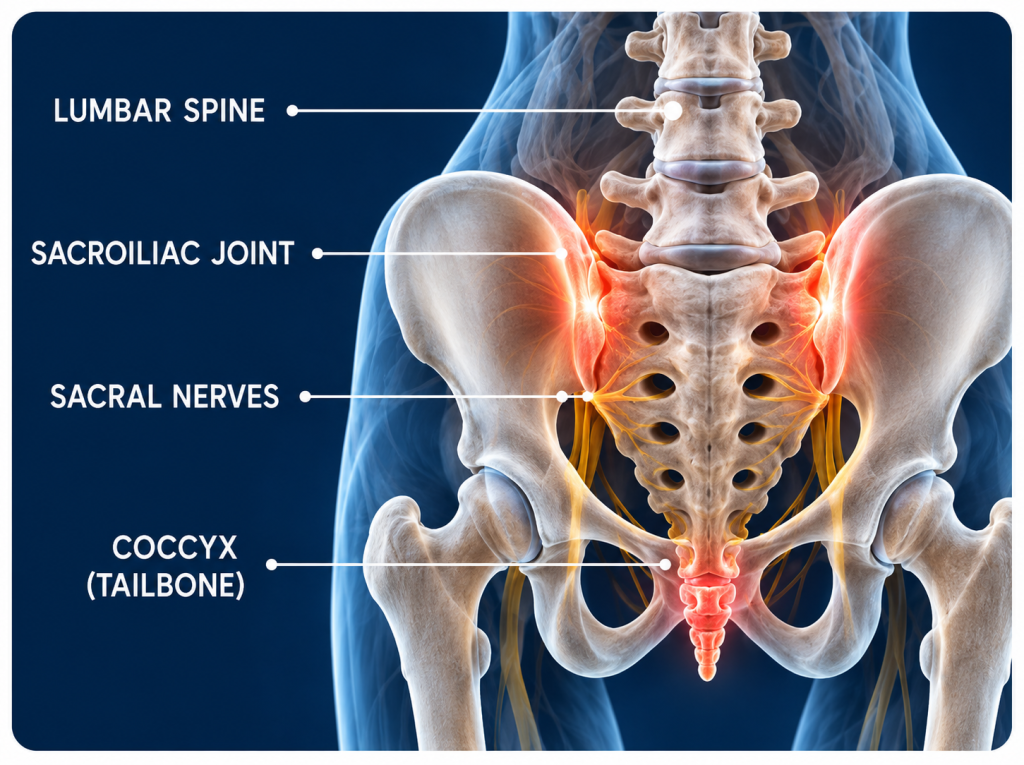
Clues the SI or Coccyx Region May Be Involved
- Pain below the beltline, often greater on one side
- Pain with rolling in bed, stairs, single-leg loading, or getting out of a car
- Buttock pain that overlaps with piriformis spasm
- Tailbone pain made worse by sitting or moving from sitting to standing
- Symptoms that persist despite treatment directed only at the lumbar spine
Could Regenerative Care Help?
When Pain Mapping identifies an injured SI joint, sacrococcygeal joint, or supporting ligament, regenerative injections such as PRP or another treatment prepared from your own blood, bone marrow, or fat tissue may be considered to strengthen and stabilize the region.
Risks and Limitations
Temporary soreness, bruising, numbness, or a short increase in pain may occur after an injection. The SI and tailbone region can be challenging because several joints, ligaments, nerves, and lumbar structures can produce similar symptoms. Lasting improvement often requires rehabilitation or regenerative treatment rather than repeated numbing or anti-inflammatory injections alone.
Related Conditions
SI Joint Dysfunction
Coccydynia (Tailbone Pain)
Piriformis Syndrome
Hip Pain
Lumbar Spine Conditions
Pregnancy-Related Pelvic Pain
Other Conditions
Frequently Asked Questions
The pain may be coming from a ligament, posterior sensory branch, hip, lumbar structure, or coccyx rather than the joint space itself. A negative joint injection can narrow the map rather than end the investigation.
When ligament injury or instability is confirmed and the tissue remains salvageable, PRP or another treatment prepared from your own blood, bone marrow, or fat tissue may be considered. The target and rehabilitation plan matter as much as the product.
Not Every “Low-Back” Pain Comes From the Lumbar Spine
A focused evaluation can separate SI, ligament, sacral, coccygeal, hip, and lumbar contributors.